

This is Life as a Sacred Text 🌱, an everybody-celebrating, justice-centered voyage into ancient stories that can illuminate our own lives. It‘s run on a nonprofit, so it’s 100% NAZI FREE. More about the project here, and to subscribe, go here:

In many ways, the Book of Numbers is the end of the Torah's "story." Narratively speaking, the Israelites make it right up to the edge of the Promised Land.
Deuteronomy is pretty much all one big speech by Moses. And then he dies.
So this last major story, here, could not only be considered the end of the Exodus arc, or even the end of Abraham's; arguably, it's the end of the great arc beginning with Creation.
So what's the message, here?
Well, first of all, we must set the stage:
The daughters of Tzlofchad, of Manassite family—son of Hepher son of Gilead son of Machir son of Manasseh son of Joseph—came forward. The names of the daughters were Mahlah, Noah, Hoglah, Milcah, and Tirzah. They stood before Moses, Eleazar the priest, the chieftains, and the whole assembly, at the entrance of the Tent of Meeting, and they said,
“Our father died in the wilderness. He was not one of the faction, Korah’s faction, that banded together against God, but died for his own sin; and he has left no sons. Let not our father’s name be lost to his clan just because he had no son! Give us a holding among our father’s kinsmen!” (Numbers 27:1-4)
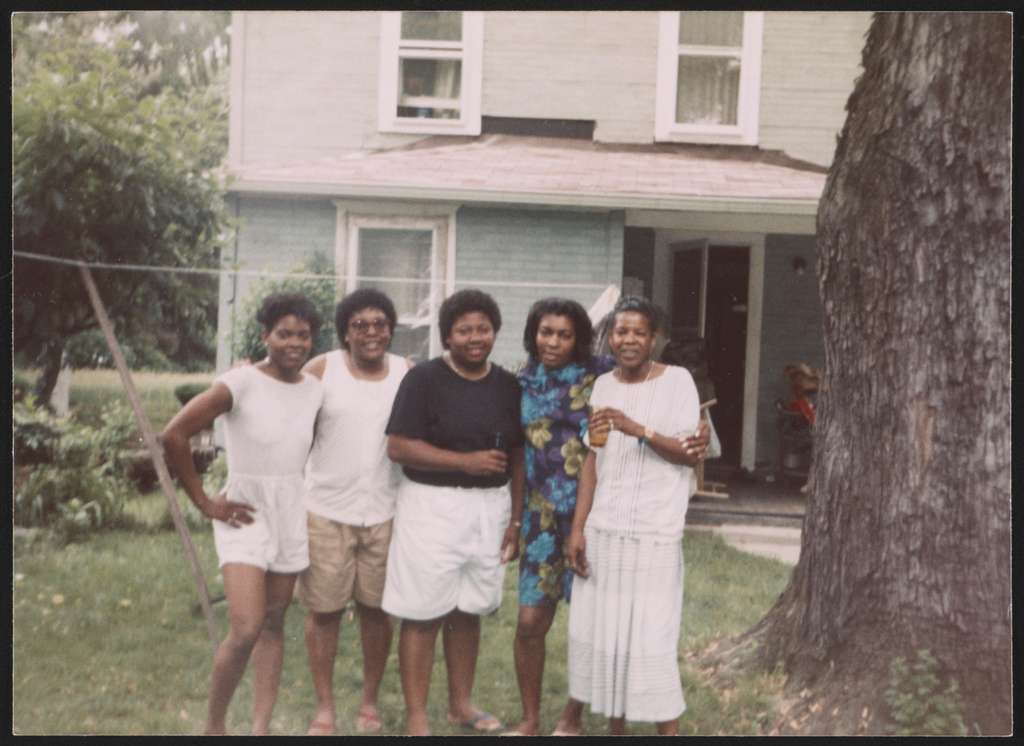
We've got these five daughters of Tzlofchad (1) who come before Moses and everyone else, and ask for a deviation from standard inheritance practice at the time, wherein holdings would pass from father to son, and if there was no son, to the nearest male relative. Because women were, in this society, functionally property.
The bravery. Can you imagine?
Gerda Lerner, historian and pioneer of the field of Women's [and Gender] Studies, writes in The Creation of Patriarchy (1983),
To step outside of patriarchal thought means: ...being critical of all assumptions, ordering values and definitions.
Testing one’s statement by trusting our own... experience. Since such experience has usually been trivialized or ignored, it means overcoming the deep-seated resistance within ourselves toward accepting ourselves and our knowledge as valid.
Finally, it means developing ...the courage to stand alone, the courage to reach farther than our grasp, the courage to risk failure. Perhaps the greatest challenge to thinking women is the challenge to move from the desire for safety and approval to the most “unfeminine” quality of all—that of intellectual arrogance, the supreme hubris which asserts to itself the right to reorder the world. The hubris of the god-makers, the hubris of the male system-builders.
Five fatherless women stood before Moses, Eleazar the priest, the chieftains, and the whole assembly, at the entrance of the Tent of Meeting, and they asked to inherit their father's land.
They asked to reorder the world.
And they're identified by ancestor all the way back to Joseph, the child of Jacob/Israel who most challenged gender norms. Huh.
Mahlah, Noah, Hoglah, Milcah, and Tirzah are named, in sharp contrast to many other women in biblical stories.

And these five changemaking women hold the end of this Exodus narrative, just as five women opened it.
Yep, that's right. Remember them? We had Shifra, Puah, Yocheved, Miriam, and Pharaoh's daughter/Batya, each of whom took heroic steps, at great risk to themselves, in defiance of Pharaoh's genocidal decrees. It was their (respective, and sometimes joint) brave civil disobedience that kicked off the eventual liberation of the Israelites from Egypt.
They lied to Pharaoh himself and flouted his explicit orders. They hid babies and made illegal deals to save Israelite boys who have been condemned to death. They exemplifed Rev. Dr. Martin Luther King Jr.'s maxim, "one has a moral responsibility to disobey unjust laws."
And now, up on the edge of the Promised Land, we see five women challenging the status quo by going through established chains of command.
They stand at the Tent of Meeting– the communally-accepted site of holiness. They make their plea to Moses, to Eleazar the priest, the chieftains, and the whole assembly.