
Moral Kindling
how the Maccabees -and we- ignite in the face of tyranny

This is Life as a Sacred Text 🌱, an everybody-celebrating, justice-centered voyage into ancient stories that can illuminate our own lives. It‘s run on a nonprofit, so it’s 100% NAZI FREE. More about the project here, and to subscribe, go here:

May Ahmed Fatih Al-Ahmed, who disarmed the shooter, be honored for his heroism and teach us all that solidarity means putting your body on the line.
And sending love to everyone impacted by the shooting at Brown, as well. Life is a Sacred Text is especially indebted to the work that undergrad Parker Weinstein has been doing for the last year. May we fight for a future where everyone can finally be safe, please.
As the writer Bear Bergman put it,
“We should, in sorrow and in resistance, increase the light. When the heart is dark, when the mood is dark, all we want is a little sanctified light. We want it to sputter and catch, and lift our hearts up as it does.” ❤️🔥
Trigger warning: Mentions of sexual abuse (not graphic.)
Today we're going to look at a midrash on Hanukah that has far too much resonance for us today, and ask:
What's the communal combustion point for injustice?
As you likely know, the Hanukah story centers around the Maccabees, a small band of rebels who somehow managed to take down a large, oppressive empire: the Selucid Greeks* under King Antiochus IV, ca. 2nd c. BCE.
Antiochus, it might be worth noting, was said to be a lavishly spending narcissist who installed unqualified cronies in high positions as well as a tyrant who was quick to anger. By early in his reign he'd curtailed civil liberties, restricted religious freedom and pillaged his subjects’ resources for his own profit. Huh.
We continue with what's known, simply, as Midrash Hanukah.**
Please join Hannah bat Matitsyahu–see where she takes us:
**This midrash appears in full in the 1915 midrashic compilation, Otzar HaMidrashim, but parts are quoted elsewhere nearly 1000 years earlier, like the commentaries of the 12th-13th c. Talmudist/Kabbalist Rabbi Eleazar of Worms. This translation is a mix of the Sefaria Community Translation and that of Anat Hochberg and Isaac Gantwerk Mayer, the latter available on the Open Siddur Project. And, of course, my own tweaks, as always. This is a condensed version of the original. I won't get into the weeds re: the sources of this midrash, the Book of Maccabees, etc. today.
The Selucids said, Let's renew decrees upon them until they forsake their God... They decreed: Any Jew who makes a latch or bolt on their door will be stabbed with a sword. (What was the reason for this [decree]? So that there should not be honor and privacy amongst the Jews, because any house that does not have a door has no honor or modesty. And any who wants to enter can enter whether day or night.) Since the Jews saw this, they got up and removed all doors of their houses.
The Greeks set up a surveillance state in order to wage psychological warfare, to remove the Jews' dignity and push them into obedience. The Jews do comply– presumably out of fear for the consequences, but nonetheless, they acquiesce right away.
They were unable to eat, drink or have sex, because of [the possibility of?] thieves, robbers, and pervy Greeks. They did not sleep day or night, and regarding them the verse is written: “You shall be in terror, night and day” (Deuteronomy 28:66).
It's been said that the more aware we are of being surveilled, the more we (even subconsciously) restrict our behavior, just as the midrash suggests.
As Joshua Franco at Amnesty International put it, “The fear and uncertainty generated by surveillance inhibit activity more than any action by the police.”
Because... the perpetual open doors of midrash aren't so distant from the ways in which our digital doors have been blown open by employers and schools, by ICE tapping search engine, email and other data– including, likely, political dissenters– by other government agencies monitoring our social media and more, or Meta giving law enforcement about half a million users' data in 2024.
Thieves, robbers and perverts indeed.
When the Greeks saw that Israel endured the decree and no one violated it in any way, they stood up and decreed another decree.
When the authoritarian state saw that they could get away with one thing, they pushed the envelope again and again. They (in this midrash) demanded Jews violate laws around keeping kosher and agriculture (to which the Jews responded by selling all their animals and going without). The Jews didn't submit, but they didn't complain. Empire saw that it could go further, so it did, decreeing that any woman who went to the ritual bath before sex would be killed. So the Jews stopped having sex. So the authoritarians kept pushing.
Not that the Jews were fine with any of this. But between fear and old frog in boiling water metaphor, it was likely hard for them to know what else to do.


✨ HOUSE OF STUDY SUBSCRIPTIONS
ARE 20% OFF THROUGH DECEMBER ! ✨
✨Get all the archives! ✨Get all the Thursday text studies and bonus conversations (in your inbox or online!) ✨Join our monthly Zoom Salons! ✨ Support the labor that makes accessible learning happen! ✨
Each time the people responded with equanimity, the State upped the ante, eventually demanding droit du seigneur –the chance to assault Judean women before their wedding night.
When the Jews heard this, they refrained from betrothals. This situation continued until the marriage of the daughter of the High Priest Matityahu to the Hasmonean named Elazar.
Mattisyahu: The guy in the Book of Maccabees who kickstarts the revolt.
At the time of the wedding feast, all of the great Jewish men were gathered.... And when everyone was sitting down to eat, Ḥannah, the daughter of Matityahu [who was the bride], stood up and clapped her hands and tore off her royal garment and stood before all of the Jewish people, revealed [naked] before her father and her mother and her groom!
When her brothers saw this, they were embarrassed, and they stood to kill her. She said,
“Listen, my brothers and uncles! So what — I stand naked before you righteous men with no sexual transgression and you get all incensed?! And you’re not becoming incensed about sending me into the hands of a Greek man who will abuse me!?!?!
A young woman– possibly a teen girl or younger (given marriage back then)–
bares herself, unashamed,
and reminds the people who've helped normalize all this fascism,
who're feasting like everything's fine
that she is to be handed over to horrific men who will assault her.
Because those men have power. Because they can.
And that there's absolutely nothing normal, nothing OK about any of this.
She declares, with her whole self, that they must stop and look up.
(I don't need to spell out this already pretty explicit metaphor, do I?)
Hannah gives her testimony, speaks truth without embarrassment, and demands, as the great Gisèle Pelicot put it, that
"Shame must change sides."
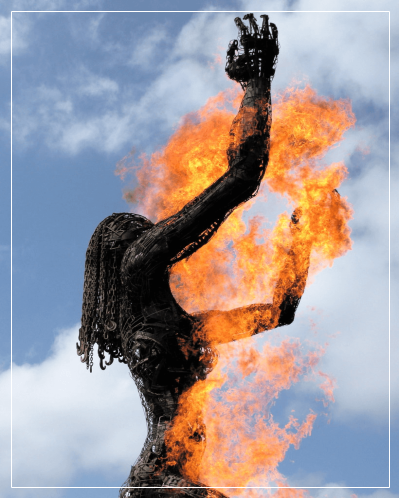
Rather, she cries, standing naked before the whole wedding,
"You’ve got something to learn from Shimon and Levi, the brothers of Dinah, who were just two men who became incensed/vengeful on behalf of their sister [after she was harmed] and ... God helped them and they were not destroyed. And YOU are five brothers... and you all, youth of the priesthood, are more than 200 men! Put your faith in the divine and God will help you.”
In other words:
Get up. Get out of freeze state. Find that anger again, let it help you do something. This horror against people who aren't you who are being harmed (against girls and women, if you want to be specific!) matters, and it should be enough to rouse you from your comfort and your feasts.
And, moreover, "Put faith in God," means not, "Sit around on your tush waiting for a magic sign," but, rather,
"Take action and trust that there's life on the other side of your terror."
We, the readers, might occupy various roles in this story (or various roles at various points) but it's undeniable that many parts of this may be... relatable.
Most of us– all of us, really, unless you live off the grid entirely, probably– haven't had doors on our houses in years.
That "terror, night and day"–day in and day out for years and years, as the Jews in this story experienced it, too, in their way –it all takes a toll. On the psyche, on the heart, on overall capacity. On the endocrine system, which gets fried from so much adrenaline and cortisol after so many rounds of ... everything.
We have to trust that if we show up, really show up – not just for the one march that one time, but routinely, as a discipline, like it really matters, because it does, for all of us – there is more of the story that can be written.
Some of us, some or all of the time, might also be those on the front lines of harm, feeling like all we're doing is screaming for others to get up from the feast and take action. When it's safe to (as it was for Hannah, in that moment), sometimes getting vulnerable (and angry! and being right!) might be a path. But staying safe is always the first priority. Always.
As it happens, Hannah lit a spark, and (according to the midrash) kickstarted the rebellion among everyone at the wedding– she's regarded as another Hanukah heroine, in addition to Judith.
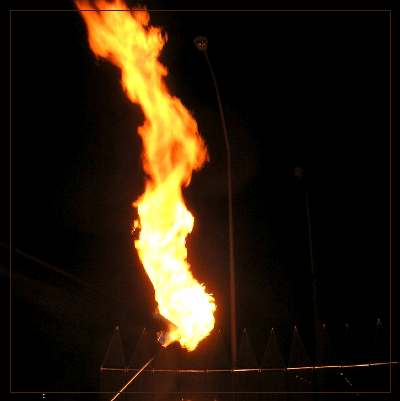
Historically speaking, here's what happened, because this is useful, too: After an initial skirmish, the Maccabees ran for the hills and, were soon engaged in all-out warfare with the massive Seleucid army.
They were outnumbered and underarmed; many of the Maccabean soldiers didn’t even have swords and armor. But they knew the terrain better; they were light, quick and mobile, relied on ambush techniques and tactical skill. Slowly, painstakingly, they beat back the Seleucids and eventually gained their freedom.
Just like every whistle, costume and city council meeting against ICE; every student movement against university capitulation; every airport official, foundation and local government that pushes back against the administration's agenda, every act of communal solidarity, every legislative victory and sign of electoral energy changing have begun to do.
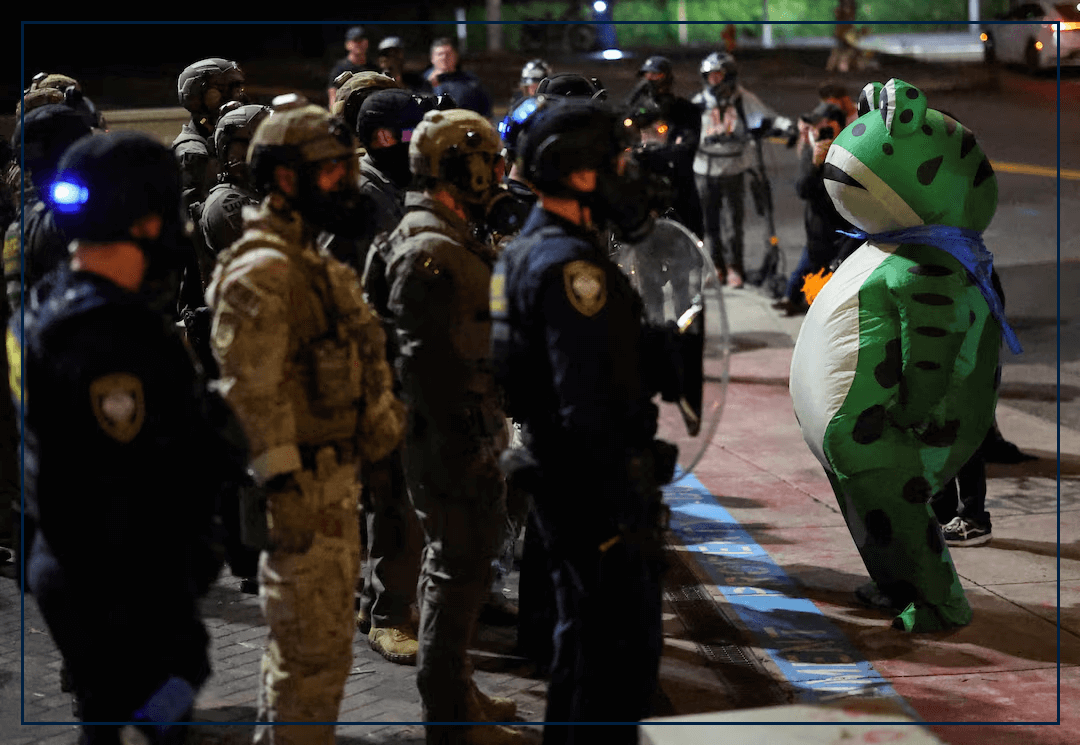
Things are moving. In fact, as Erica Chenoweth and their colleagues at Harvard's Nonviolent Action Lab recently concluded,
Protests in 2025 have reached a wider swath of the United States than at any other point on record. And the geographic reach of protest activity... has remained remarkably high throughout the year.
The miracle of Hanukkah is that, against all odds, idealists were brave enough to take on a repressive regime.
Their smart thinking and intimate knowledge of their own country was enough to outmaneuver a government bent on maintaining power through force.
And even if our next move probably isn't, "go hide in caves," we do already know a lot of the right things to do. We must listen to Hannah, to all the Hannahs. We must be, bravely, Hannah, when it's our turn, we must be her brothers who listen, we must be her father who leverages his position, we must be everyone at that wedding if and when it's our turn.
We can and must trust that when we take action, there will be more to the story for us, too.
Burn big, friends.
❤️🔥❤️🔥❤️🔥❤️🔥🔥❤️🔥❤️🔥❤️🔥❤️🔥
Share this post
 Share on Bluesky
 Share on Threads
 Share on Facebook
 Share on Mastodon
 Share on Reddit
 Share on LinkedIn
 Share on Email

Give the gift of a Life is a Sacred Text subscription!
20% off through December!
The people you love deserve nourishment, not a scarf.
Weekly injections of sustaining wisdom!
Monthly Zoom Salons!
Four years of archives!
So much more!! ✨
And don't forget:

This is your chance! This House of Study subscription for YOU is only 20% off for a little while longer, this is a December-only sale.
Get all the great things that come with a House of Study membership and enable this project to continue, as well as continuing to keep it accessible for so many more people... !
HANUKAH'S GREATEST HITS:
We've talked about bravely facing the painful history of Hanukah from one historical / contemporary angle:
 Rabbi Danya Ruttenberg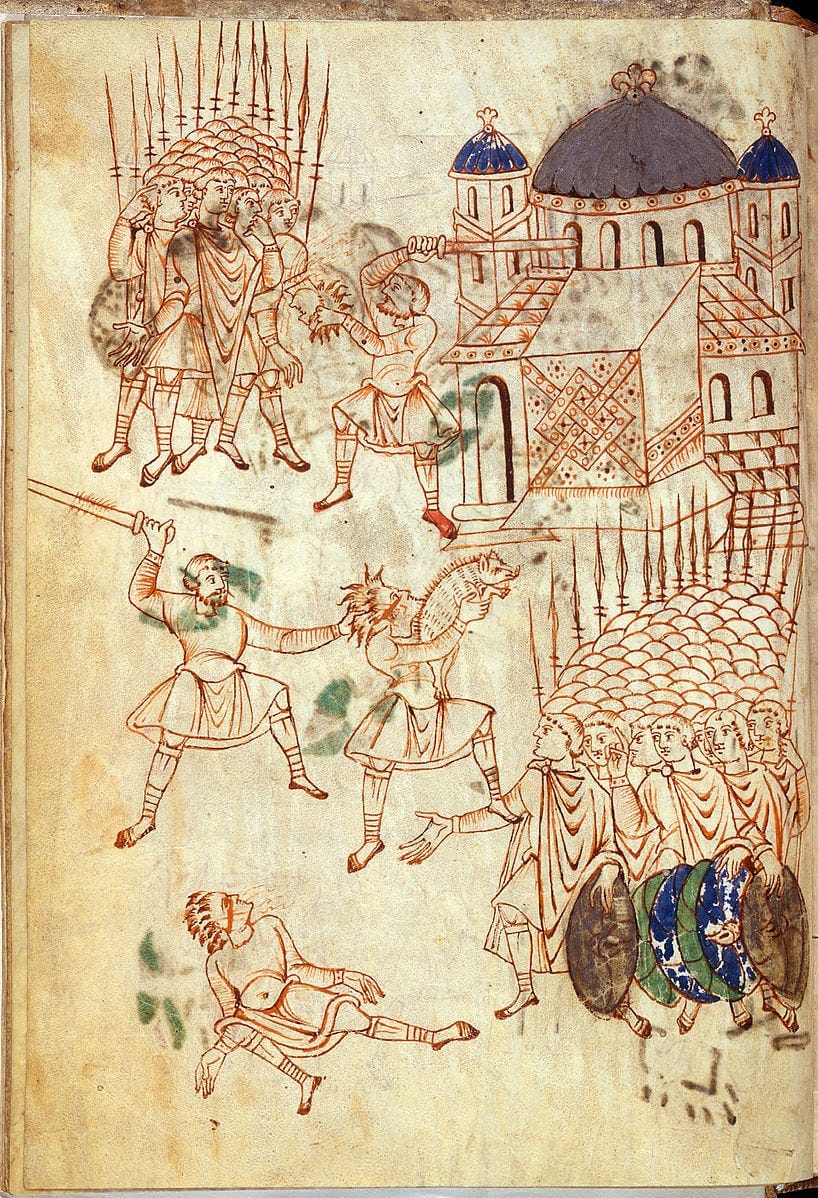
We've talked about integrating the history of the holiday so that we can get to a more adult relationship with that story, this holiday, and religion in general:
 Rabbi Danya Ruttenberg
We've reveled in the story of Judith, her multi-use snack bag, and her sharp, borrowed sword:
 Rabbi Danya Ruttenberg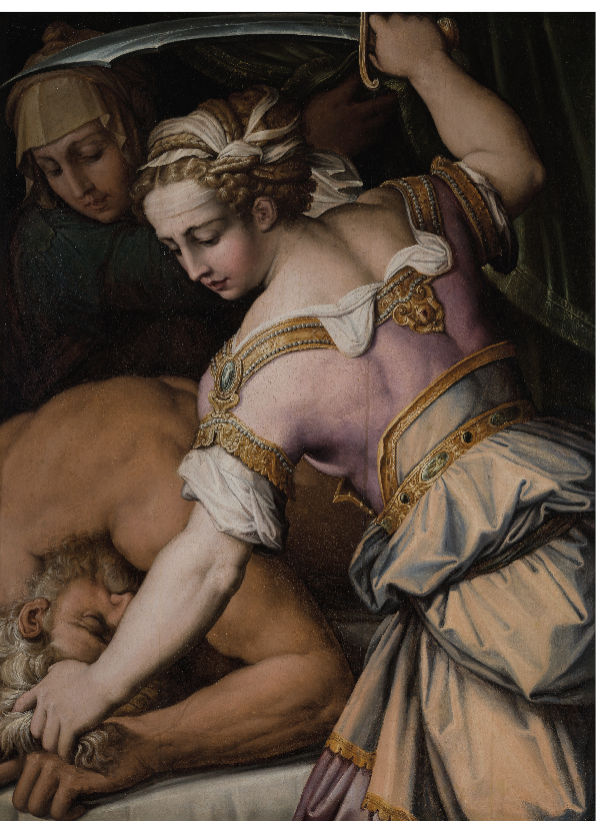
And seen how she's manifested in art and poetry over the centuries and across cultures, including in a riveting Bēowulf-era Old English epic:
 Rabbi Danya Ruttenberg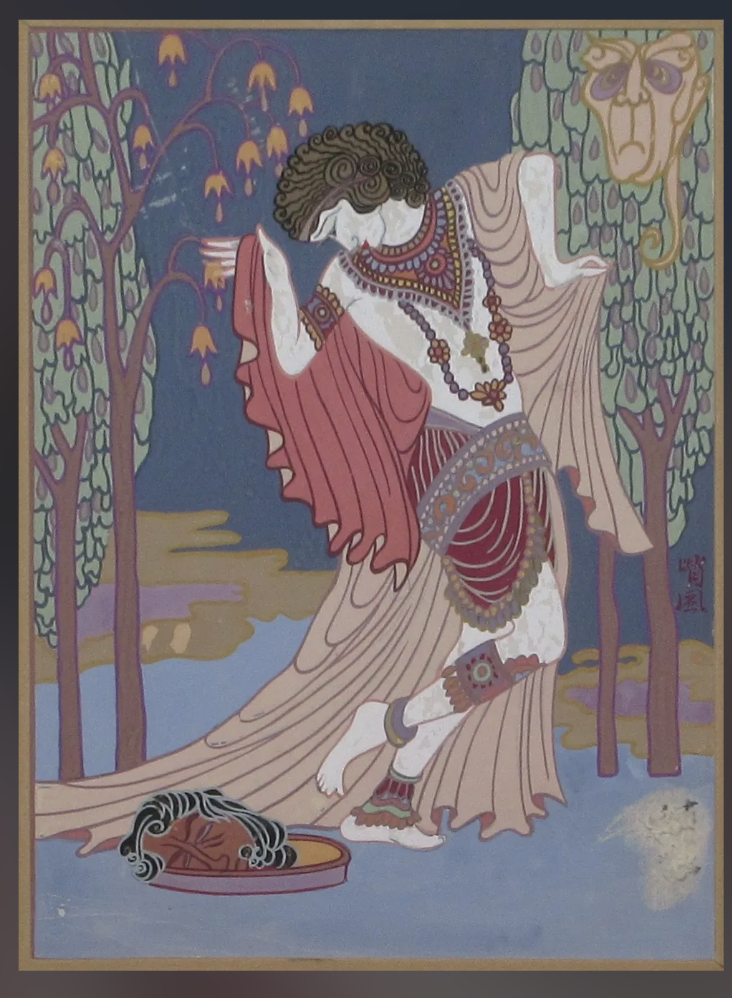
And we've traced the origin of the oil miracle story:
 Rabbi Danya Ruttenberg
ALSO NOT UNRELATED:
 Rabbi Danya Ruttenberg
 Rabbi Danya Ruttenberg
Very Pedantic Translation Note: I used the slightly anachronistic "Jews" to translate "B'nei Yisrael"/children of Israe in today's midrash; if you want to get reaaally technical, "Jew" wasn't a concept until after exactly the revolt that we're discussing here, as Professor Shaye Cohen discusses in The Beginnings of Jewishness. Nonetheless, "Israelite" could be too easily confused with someone from the geographic region (and that's anachronistic; we're talking about religion/peoplehood), and re: "people of Israel" and variants, it can read clunky and every once in a while someone shows up who gets confused about the nation-state founded in 1948 after the ancient community of people and it's just not worth the hassle. "Jews" is easier for a wider audence and functionally communicates the same thing.
Support independent work committed to telling inconvenient truths
(and offering persnickety footnotes as needed):