Our Side Of The Deal
the tl;dr of covenant, and everything since Creation: Choose Life
This is Life as a Sacred Text 🌱, an everybody-celebrating, justice-centered voyage into ancient stories that can illuminate our own lives. It‘s run on a nonprofit, so it’s 100% NAZI FREE. More about the project here, and to subscribe, go here:

This week, after four and a half years of investigations and examinations, journeys and questions, we arrive to what is, in so many ways, the climax of the entire book: the moment towards which the entire story has been building.
The whole narrative arc from the Creation of the world through one family's tribulations, through the Exodus, Revelation, struggles in the desert and beyond– was to get us to this moment:
You are stationed today, all of you, before the presence of God: your heads, your tribes, your elders and your officials, all the householders of Israel, your young, your wives, your stranger who is within your camp, from your woodchopper to your waterhauler, for you to cross over into the covenant of God, and into God's oath-of-fealty that God is cutting with you today.... (Deuteronomy 29:9-11)
It's covenant time.
A covenant: A binding agreement between two parties, in which each is required to uphold their side of the accord.
This covenant (which, we learned last time, subverts the Assyrian vassal treaty model) is presented to everyone.
Everyone. Those with social privilege and those without. Those who are part of the cultural community and immigrants, strangers to the national polity.
And what is the apex of this covenant? The pure, molten core of it?
I call heaven and earth to witness against you this day: I have put before you life and death, blessing and curse. Choose life—so that you and your descendants will live. (Deuteronomy 30:19)
Choose life.
Those two words.
That's the covenant, and where we've been getting to all this time.
Choose it. It's not a given. As many sages and commentators observe, a crucial piece of this is that our free will is involved. Our agency matters.
We see a harkening back to the very beginning, to the original subversive choice: eating from the Tree of Knowledge of Good and Evil. Eve used her free will to make that choice, and because of it, we can now discern between good and evil, life and death, blessing and curse.*
*This connection between this verse and the Tree of Knowledge also appears all over the sources, originating, my guess would be, in Midrash Lamentations Rabbah 3:13 and possibly elsewhere.So what does it mean to choose life?


Let's start with the basics: The Talmud (Sanhedrin 74a) makes it clear that living is so crucial that, if forced to choose, one should violate just about any mitzvah instead of sacrificing one's own or another's life.*
*Sexual assault, murder and acts of idolatry are the exceptions to this rule. (Understand the third in the context of the Roman Empire and the broader pagan world in which it was created and the speed at which a slippery slope could devastate a whole community.) Later Jewish law, writing from a time of ongoing religious persecution, amended this to say that death was only preferable to idolotry if someone was demanding they do an act in public, in front of ten other Jews who might be thus led astray (Shulchan Arukh, Yoreh De'ah 157:1). If the order to commit idolotry happened in private, the Jew should do what must be done to preserve their own life.But, of course, there's more to it than that. So let's see what Maimonides makes of Deuteronomy 30:19:
... True principles are called life, and corrupt principles death. Thus God shows that “life” and “good,” “death” and “evil,” are identical.... (Guide for the Perplexed, Part 1 42:4)
I might extend his read of the verse to suggest that good choices are those that lead to life flourishing, and evil ones lead to to death.
In other words, the point of the covenant? The culmination of the the last 183 chapters, everything from Creation until now?
That it's our job to help life to thrive, through our choices,
–for everyone, with and without privilege, enfranchised and not–
– and for all of our descendants.
When you subscribe to the Life is a Sacred Text House of Study, you get extra sustenance for your heart, soul and brain and every week.
Isn't it time to invest in the parts of you that matter most?
(ALL SUBSCRIPTIONS NOW 20% OFF THROUGH 2025!)
❤️
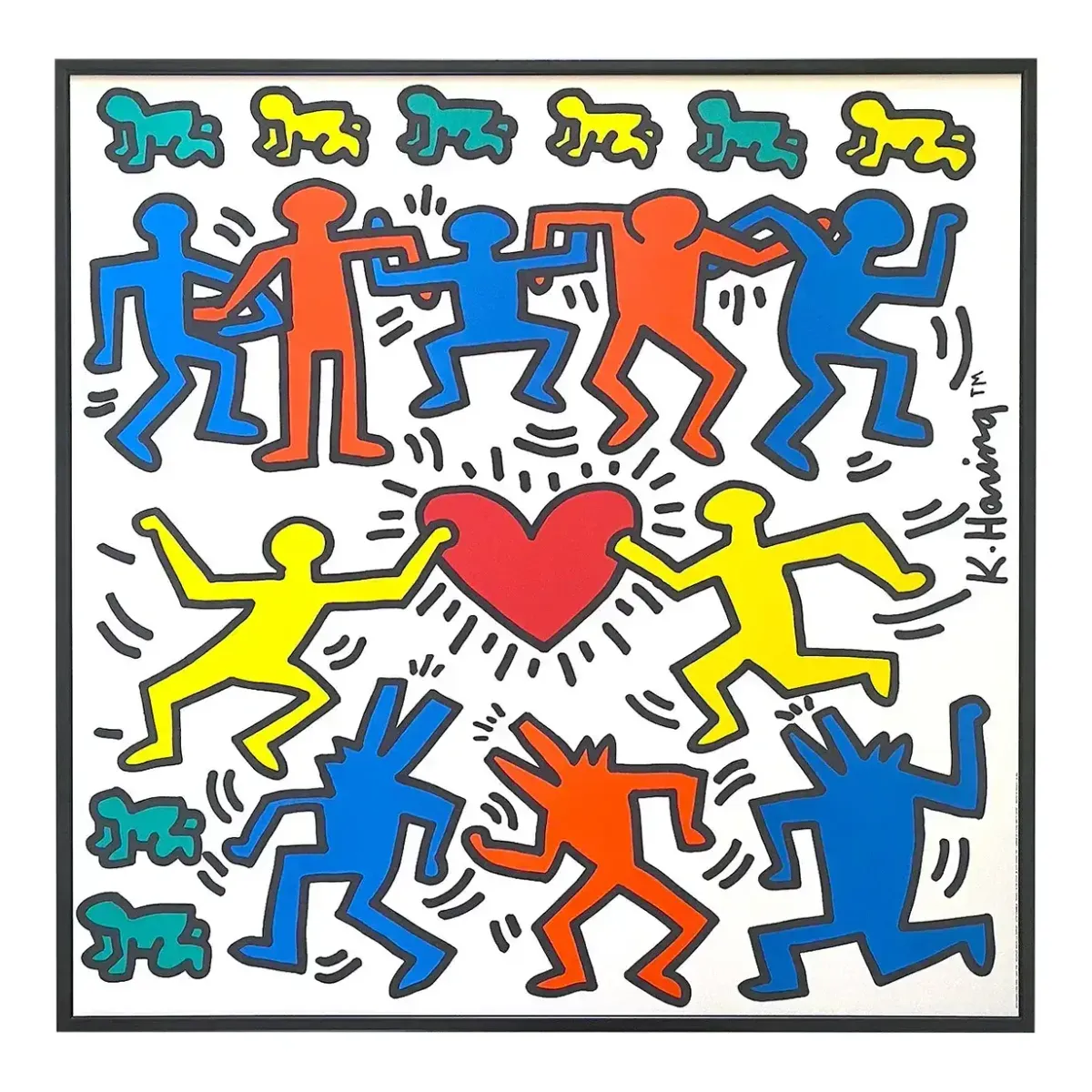
Choose life: Pithy words, but the work starts to become obvious when you apply that lens to, well, everything:
It means that everyone has enough to eat, every day.
It means that everybody can access all the healthcare they might need.
It means that people can go about their lives without being gunned down.
It means that people of all ages, abilities and situations are cared for, and care for, in community.
It means not abusing children, or anyone– or protecting the people who do.
It means not caging people because they made a mistake or were struggling.
It means being more concerned about people's welfare and safety than their administrative status.
It means making choices around war and peace that minimize harm for every human being involved.
It means ensuring that everyone has the other things that lend themselves to the flourishing of life, like bodily autonomy; secure housing; economic stability free of exploitation; the ability to navigate society without structural barriers; access to education.
It means stewarding the planet as a nonnegotiable part of our collective thriving.
It's not complicated, really.
When we lift our heads from the weeds and look at the entire forest, it becomes clear how and why so many of the systems in which we are now embedded contravene the two-word mandate.
And then, when we look back at the Torah, the logic behind so many of its demands becomes clear: its calls for im/migrant justice; for worker justice; for economic justice; redeem captives; to protect the Earth and so much more.
(And many other calls are clearer in the context of later Jewish law, and others still may leave us curious or confused from our contemporary vantage, but we can nonetheless engage these details as process, as faithful partners in the ever-ongoing work of receiving the Torah anew.)In fact, the 12th c. Spanish commentator Ibn Ezra's comment on the meaning of this verse– on what "choosing life" means–
"The explanation is that 'life' is 'to love'."
In other words, as he reads it, the Torah is saying, "Choose to love."
Which brings us back to the heart of Leviticus, the centermost verse of the Torah:
"Love your neighbor as yourself, I am God." (Leviticus 19:18)
Yep.
We have free will. Every choice we make is one that can support the joyful blossoming of life, that can bring us deeper into love and connection – or farther from it, to hate, to death, to disconnection and harm.
The terms of our side of the deal are pretty simple, ultimately:
We must choose life, every day. Every policy. With every risk. Every effort.
Which doesn't mean that it's easy.
Only that it's the most important thing in the world.
🌱 ❤️ 🌱

GIFT A HOUSE OF STUDY SUBSCRIPTION!
💥 NOW 20% THROUGH 2025!!! 💥
Weekly injections of nourishing wisdom!
Monthly Zoom Salons!
Four years of archives!
So much more!! ✨

No, but really.
This is your chance to get in on the House of Study:
Weekly goodness to nourish you during these trying times
(But more email is OPTIONAL!
You can just go hard periodically on the website if you'd rather)
Monthly Zoom Salons
Ask the Rabbi Q&As
Access to 4 1/2 + years of archives
Get hooked up with a hevruta/study partner if you want
Supporting the infrastructure that makes this possible
and so much more....
and as ALWAYS, if you want in on the House of Study, but paying isn't for you right now, email support @ lifeisasacredtext.com and we'll hook you up. ❤️ 🌱
And don't forget: When you join the House of Study, you can join
The December Zoom Salon!
Sunday,December 7, 2-3:30 EST, 11-12:30 PST.
(You do not have to know anything to show up!
And you are allowed to keep your screen off the whole time if you want!
You can also choose to have your screen on and be crafting or eating or with your hair a mess and we are all very casual and friendly and welcome you exactly as you are!)
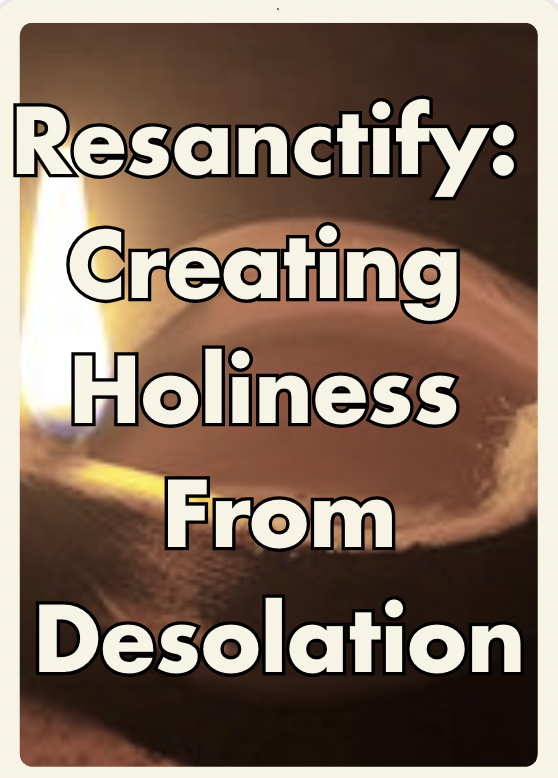
There's been a lot of desecration and devastation this last year, these last years, and knowing how to create holiness, once again, in the wake of so much ruin is essential. In the season of Hanukah, we'll look at a couple of texts that might be able to show us how to reignite and purify that which seems like it has been entirely lost, whether in our polity or in ourselves.
Come get the fuel you need.
RELATED:
Share this post
 Share on Bluesky
 Share on Threads
 Share on Facebook
 Share on Mastodon
 Share on Reddit
 Share on LinkedIn
 Share on Email
Support independent work committed to telling inconvenient truths:

Related:
 Rabbi Danya Ruttenberg
 Rabbi Danya Ruttenberg