

This is Life as a Sacred Text 🌱, an everybody-celebrating, justice-centered voyage into ancient stories that can illuminate our own lives. It‘s run on a nonprofit, so it’s 100% NAZI FREE. More about the project here, and to subscribe, go here:

Do you remember when we started talking about the origins of Deuteronomy, and how King Josiah, who ruled Judea from ca. 640–609 BCE, just "happened" to find this scroll that told him to do things that were related to centralizing Temple worship to Jerusalem?
We didn't get into the nitty-gritty of why, then, but it's hard to understand Deuteronomy without that context. So we'll open that door today.
As the Book of Kings tells it, the First Temple in Jerusalem was constructed in the 10th c. BCE. For a long time, it served as the royal headquarters in Judea, but it wasn't the only place from which sacrifices to God were offered.
As discussed previously, we have mentions of altars elsewhere all over the biblical texts– Shiloh, famously, from the Hannah story in I Samuel 1, and there's also archeological and/or textual evidence of altars in places like Bethlehem, Beersheva, Arad, Gibeon, and Bethel.
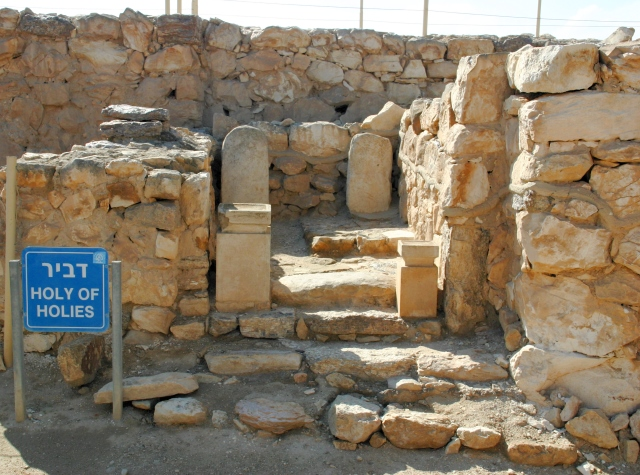
King Hezekiah ruled Judea from 727–698 B.C.E. According to the Book of Kings,
He abolished the high places/shrines and smashed the pillars and cut down the sacred post. (2 Kings 18:4)
We'll get into the pillars and sacred post business another day. But the shrines are notable now.
Why did he do all this? Let's see. In 722, the Assyrians conquered the Northern Kingdom– a horrific disaster that resulted in mass death and many, many northern refugees streaming down into his kingdom. It may have been that Hezekiah saw this disaster as a sign that his own kingdom ought scrub out any traces of religious corruption, clean up their own act.
It may have been that, as the Assyrians encroached, he thought centralizing could simplify things, help him have oversight and control over operations generally. (The Assyrians did siege Judea pretty hard around 701 BCE, which ended with Hezkiah becoming the tribute-paying subject of the Assyrian King Sennacherib).
It's also possible that Deuteronomy was basically sci-fi– that is, that, by the time the Assyrians had rolled through the North in 722 BCE and then Judea 20ish years later, these satellite altars weren't much to speak of– that the Assyrians themselves were the ones who razed them, not these pious Judean kings. (That's what Bible scholar Lisbeth Fried argues.)
Anyway, assuming it was Hezekiah, as reported:
Would you like to guess how popular this plan was? Tell people that they can't have their local cultic shrines, and give them nothing to fill the void?
Mmm.
The minute that Hezekiah's son, Manasseh, took the throne,
He rebuilt the shrines that his father Hezekiah had destroyed… (2 Kings 21:3)
And yet. The whole Centralized Temple In Jerusalem (Conveniently Next to the Royal Seat of Power) concept never really left. When Manasseh's grandson Josiah took the throne,* there seemed to be a key reason for him to try again– carefully accounting for a few of the factors that caused great-grandad's attempt to fail.