
Conquest Narrative // Good Relation
A powerful take on the Book of Joshua from Daniel Delgado

This is Life as a Sacred Text 🌱, an everybody-celebrating, justice-centered voyage into ancient stories that can illuminate our own lives. It‘s run on a nonprofit, so it’s 100% NAZI FREE. More about the project here, and to subscribe, go here:

When I knew that we were going to be starting with Prophets – and thus entering the Book of Joshua – I knew that we needed to go deeper into the Conquest Narrative.
That is: The fact that after the Israelites are liberated from Egypt and wander in the desert, they enter the Promised Land and, well, slaughter the people already living there in order to take their land. It's commanded in Deuteronomy, and much of the Book of Joshua is about these massacres.
We've already looked at it once, from the historical perspective, but, as Osage Nation scholar Robert Allen Warrior noted in his landmark essay, “Canaanites, Cowboys and Indians,” the
“historical knowledge does not change the status of the indigenes in the narrative and the theology that grows out of it.”
Whatever happened or didn't, this is still the story that we have, and read. And the fact of it is, this biblical narrative has been used to justify untold, immeasurable harm over the centuries, across lands, up through today.
Amid falling bombs in Iran, those who use these conquest narratives as justification for pogroms are intensifying their ethnic cleansing of the West Bank. (Airstrikes have also resumed in Gaza, fyi.)
How we talk about these stories matters. How we read them matters.
Pretending that they're just not there is not an option.
As I was grappling with these questions myself, I turned to my friend Daniel Delgado, whom you might remember from the "Are Jews Indigenous?" essay. (You may also remember that he's a rabbinical student who's both Quechua and Ashkenazi and most importantly: brilliant.) I asked for his take, which was, not surprisingly, so stunning that I asked him to turn it into a piece for you all.
I'm delighted to share it with you now.
We're only able to offer guest posts like this because of the support of paid subscribers -- since, of course, we, here at Life is a Sacred Text, believe in paying people for their labor.
Level up your subscription to support this -- and all the work that we do here.
The Conquest Narrative and Good Relation
By Daniel Delgado
The Book of Joshua can be a tough read for many reasons. Not least of these is its very premise: G-d has commanded the Israelites (our ancestors!) to conquer the land of Canaan, exterminate the original inhabitants, and establish complete demographic and political domination. The text glorifies this sacred mission, at times seeming to revel in xenophobic brutality.
Even before the 20th century, there was already a long history of European colonizers using this story as justification for genocide against Indigenous peoples. In a post-Nakba world—and particularly after the destruction of Gaza—reading it can feel positively intolerable.
But here we are, with the text in our canon. And although there is historical consensus that neither the Israelite conquest nor the extermination of the Canaanites ever actually happened, the story of that conquest is still part of our sacred text.
How do we make sense of this? For myself, I find satisfaction neither in ignoring it, nor in dismissing it as ahistorical (and then ignoring it), nor in simply rejecting it as abhorrent (and then ignoring it).
Sacred words demand attention. They are given to us—whether by the mouth of Divinity or the hands and voices of our ancestors—with something to teach.
My thoughts on this story are still in development. But here’s where I’m sitting with it, as of today.
A Journey Into Myth-Time
European Enlightenment thought has trained us to conceive of time as linear, a series of consecutive events with causality flowing in a single direction from past to future. In this framing, “history” is the effort to uncover the single correct answer to the question, what really happened? It presumes that the laws of nature are fixed and eternal, and therefore all historical events must have conformed to the same basic reality structure.
The Book of Joshua and the rest of the Tanach [Hebrew Bible] were never meant to be read as “historical” in this modern sense. Instead, these texts are what I call ancestor stories and religion scholars call myth—not in the sense of “falsehood,” but rather in the sense of “sacred stories that tell us who we are, where we came from, and our place in the world.”
In Biblical Myth-Time, cosmic forces are at work shaping the world into the one we know today. Massive floods cover the earth; snakes and donkeys speak like human beings; the inhabitants of Canaan number giants among them.* So rather than reading the text as a historical chronicle, we read to understand where we came from, what the world is like, and who we are supposed to be today.
There is and long and robust Jewish tradition of reading sacred text in this way, particularly with the techniques of midrash (inter- and metatextual riffing) and sod (mystical allegory). Conveniently, it shares much in common with techniques of modern literary analysis, albeit coming from a dramatically different worldview.
Reading the Conquest Narrative in this way, the most important thing to understand is that the Israelites and Canaanites of the story do not and are not meant to map directly onto contemporary peoples.
This point is worth emphasizing, because it’s very natural in our current context to read Israelites as Jews/Israelis and Canaanites as Palestinians. I would argue that this is a fundamentally incorrect reading of this text.* The lesson of the story is deeper than simple geopolitical propaganda.


Conquest as Warning
If the Conquest Narrative is part of our Origin Myth, what does it tell us about who we are, where we came from, and where we are going?
To start, it establishes that the Israelites (and we, their Jewish descendants) are fundamentally outsiders to the Land. In a Biblical text that repeatedly emphasizes the eternal connection between this particular people and this particular land, the emphasis on foreignness is notable.
It’s also consistent with the Biblical view that all humans are essentially exiles from Eden, our universal Origin Place. In this cosmovision, the connection between peoples and lands is not intrinsic, but rather relational and covenantal—based upon right living toward one another, the land, and the Creator. So from Sinai onward, the Israelites are repeatedly warned that they will merit to continue dwelling in the Land only if they live in a good way.*
“If you do not follow me, and do not observe all these commandments...” (Leviticus 26:14) concludes the lengthy, sprawling legislative text commonly called the Holiness Code,** then proceeds to detail the horrific realities of what being exiled from the Land will entail.
*“Good” being defined by the mitzvot—that complex, interconnected web of obligations that defy efforts at Western classification.**We’ve just been given a series of laws on topics including treatment of workers and the poor, agricultural techniques, sexual conduct, what and how to eat, treatment of the land, manumission of slaves, honoring parents, and more.
So now we understand why, in this Origin Myth, the Israelites could not simply enter an empty land, but rather needed to conquer it from someone else. The Canaanites show us what happens to those who fail to live in good relation:
“You shall not learn to do like the abhorrent things [of the Canaanites]… Because of these abhorrent things YHWH your God is about to dispossess them before you!” (Deuteronomy 18:9-11.)**The particular “abhorrent things” referenced here are specific magical practices. But again, I am encouraging us to look beyond the specific context to the whole picture: The Tanach as a whole is telling us something about what it means to be in good relationship with the land.
The text tells us that the Canaanites have violated their covenant with land and Creator. They haven’t lived in good relation, and they are being cut off as a result.
Now, that’s incredibly disturbing if we read this as a theology of geopolitics and a prescription for how to behave toward other nations: “Any conquest is just God’s will!”
But if this is an Origin Myth, with its historical meaning restricted to Myth-Time, then it tells us something really important: if the Israelites don’t watch themselves, the same will happen to them.
“Like the nations that YHWH causes to perish before you, so shall you perish, inasmuch as you would not heed the voice of YHWH your God.” (Deuteronomy 8:20)
Of course, there is no early and late in the Torah. We have received a complete Tanach text, so we—like the omniscient Creator—already know how this story will end. The Israelites will screw up, massively. The prophets will warn us, again and again, that we are violating our convenant with Land and Creator by mistreating the poor, by waging pointless wars, and by elevating material power over the path of the spirit.
We will be exiled.
In the Tanach’s cyclical view of history, this is only natural. Just as Adam and Eve were exiled from Eden, as Avraham and Sarah wandered far from their land of birth, as the generation of the Exodus spent a lifetime in the wilderness. So will be the fate of this people.
As readers, we know this before we have even opened to the first page. Certainly before the first offensive is launched across the Jordan River.
We will conquer the land. But we will not keep it.
Level up your subscription to support work like this -- and all the work that we do here.
From Conquest to Exile
We could stop here, read the Conquest Narrative as both warning and foreshadowing, and move on. But there’s something that sits wrong with me about this solution.
The story we have received depicts the conquest of a land inhabited by human beings.
Accepting their extermination as simply a plot device strikes me as an act of spiritual violence, a complicity in dehumanization, and a desensitization to how this genocidal pattern could—in cyclical time—reassert itself again in our future.
In fact, there’s an earlier genocidal episode in the Tanach. On the way from Egypt to the Promised Land, God commands Moses to “harass and strike” the Midianites in retaliation for an inter-religious conflict.* Moses responds by ordering the death of every **Midianite adult.
*Numbers 25 and onward. Yes, there is a lot more to it, and yes, this whole story is very uncomfortable for many of us. **Numbers 31. There’s also an even earlier genocidal episode, the slaughter of Shechem, which is actually condemned within the narrative itself (Genesis 34 and 49:5-7).Rabbi Arthur Ocean Waskow, my teacher of blessed memory, suggests,
“We could learn precisely from our own disgust and horror [at this story]. We could treat the Torah passage as … a warning that ‘we’—whatever ‘we’ you like—are not immune to the genocidal impulse… This impulse we must guard against, [and] if some ‘we’ is accused of genocide, we must take the accusation seriously and examine ourselves.”
If we recognize the holiness of our “disgust and horror” at the Conquest Narrative, what can it teach us?
Reading the story in light of the overall arc of Jewish history, we immediately see that as a people, we have spent much more time in the state that our tradition calls galut (“exile”) than one of sovereignty within the Land.
Galut is a complex concept, but in brief: traditional Jewish thought has held that our exile from the Land was a direct result of failing to live in a proper way, and therefore it could only be reversed by God during the final redemption (when “the wolf will live with the lamb,” the dead will be resurrected, and so forth).
Crucially, mystical teachers from the Holy Ari* to the Lubavitcher Rebbe** have held that we were not sent into exile as a punishment, but rather because a time had arrived in which our holy work could no longer be done while dwelling all together in the Promised Land.
That is, galut is the state the Jewish people are supposed to exist in. We are now meant to live all around the world, in interrelationship with many other peoples.***
*Isaac Luria, 1534-1572, Palestine**Menachem Mendel Schneerson, 1902-1994, USA
***As I said, this is a very complex concept, and a lot more can and should be said about it! I have written more in depth about it in a couple of forthcoming essays.
Coming out of slavery and into freedom, our ancestors had a dilemma: How will we live in the world? How will we strive for safety? What kind of people do we want to be?
They tried the path of conquest; genocide; sovereignty; military might. Maybe that path was incompatible with right living—with all those good relationships between people, Land, and Creator.
Maybe the fact that it ended badly is the entire point.
So our Creator removed us from that state and handed us a different task: galut. Where the rules we should live by are not those of domination and control, but of interrelation and coexistence.
Maybe those ancestors, so recently enslaved, didn’t know any better way to do things.
May we ourselves merit to find one, speedily and in our days.
Share this post
 Share on Bluesky
 Share on Threads
 Share on Facebook
 Share on Mastodon
 Share on Reddit
 Share on LinkedIn
 Share on Email

And you'll get amazing goodies to nourish your heart, soul and brain every single week!
And as always, cost shouldn't be a barrier to Torah. If paying isn't for you right now; life@lifeisasacredtext.com and we'll hook you up.

Daniel Delgado (he/him) is a Quechua and Jewish writer, editor, game designer, rabbinic student, and rabble-rouser. He is a former editor of Earth First! Journal and the author of a chapter in The Sacred Earth: Jewish Perspectives on Our Planet. His short fiction has appeared in publications including Lamplight Magazine and Cossmass Infinities. He is also a designer on Koboa, a South American TTRPG setting. You can follow him on Bluesky.
MORE:
 Rabbi Danya Ruttenberg
 Rabbi Danya Ruttenberg
 Rachel Havrelock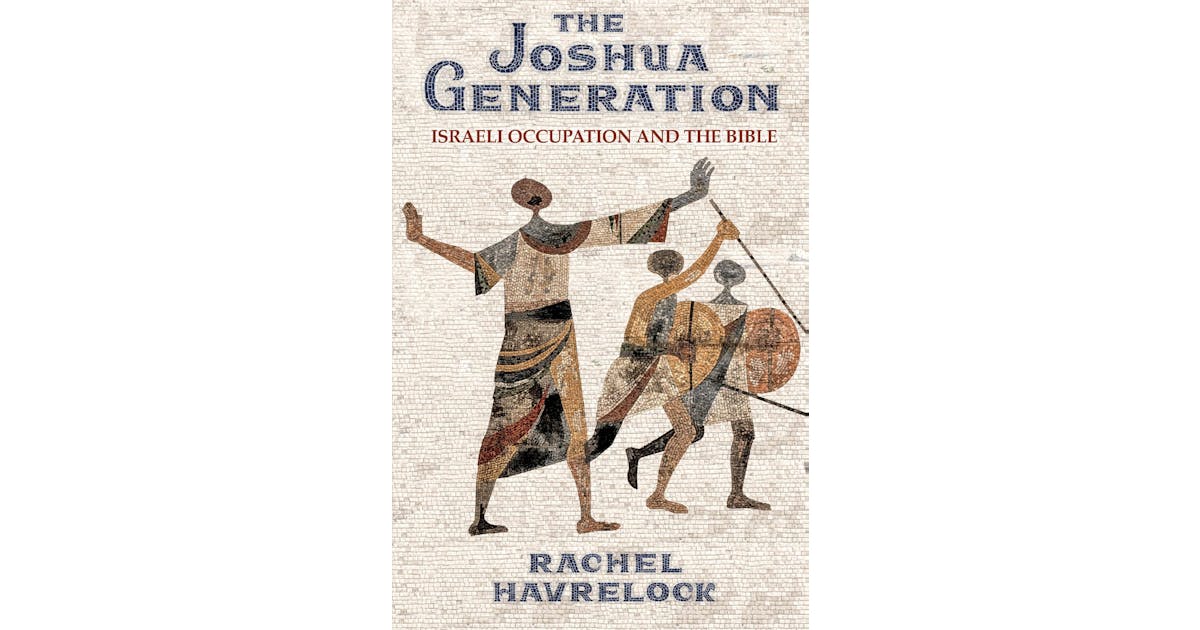
Support independent work committed to telling inconvenient truths: