
The Lachish Reliefs
an historical horror, from another POV
This is Life as a Sacred Text 🌱, an everybody-celebrating, justice-centered voyage into ancient stories that can illuminate our own lives. It‘s run on a nonprofit, so it’s 100% NAZI FREE. More about the project here, and to subscribe, go here:

For everyone on your list who wants more nourishment for their heart, soul and noggin–
Now you can give gift subscriptions – 10% off through December!
We're now also offering group subscriptions! A four-pack for yourself and three others, or to cross four gifties off your listy– it's always 20% off.
And personal subscriptions are also 10% off through the end of the month:
Now.
“Have you not heard that I determined it long ago? I planned from days of old what now I bring to pass: that you should turn fortified cities into heaps of ruins, while their inhabitants, shorn of strength are dismayed and confounded” (2 Kings 19:25–26)
Last week we talked, in passing, about the Assyrian invasion of Israel and then Judea.
I thought that this week might merit a few more words about the latter, both because it's a fascinating case wherein sources outside the Bible both confirm and extend a biblical account– and, especially, because it's a stark ancient addition to our ongoing conversations about occupation, invasion, and the price of war.
So, as we've discussed previously, Assyria conquered the northern kingdom of Israel in 722 BCE. (Sources vary as to why: A result of political double-dealings? Punishing reluctant vassals? To establish a military stronghold in the region? A combo of reasons?)
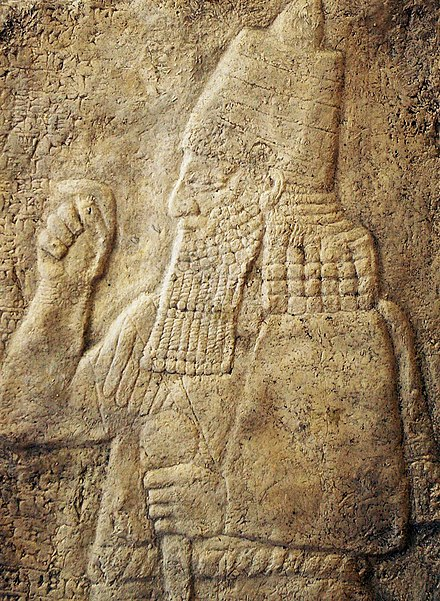
Sîn-ahhī-erība, ("Sîn has replaced the brothers,"), 𒀭𒌍𒉽𒈨𒌍𒋢, better known as Sennacherib, was the king of the Neo-Assyrian Empire from 705 BCE until 681 BCE.
In 705 BCE, a number of Near Eastern states– Sidon, Ashkelon, Moab, Edom, and others, including Judea– rebelled against the Assyrians, trying to throw off their vassal state status.
Would you like to guess if the Assyrians thought this was cute?
They did not.
Sennacherib came in with the full force of an imperial army in 701 BCE.
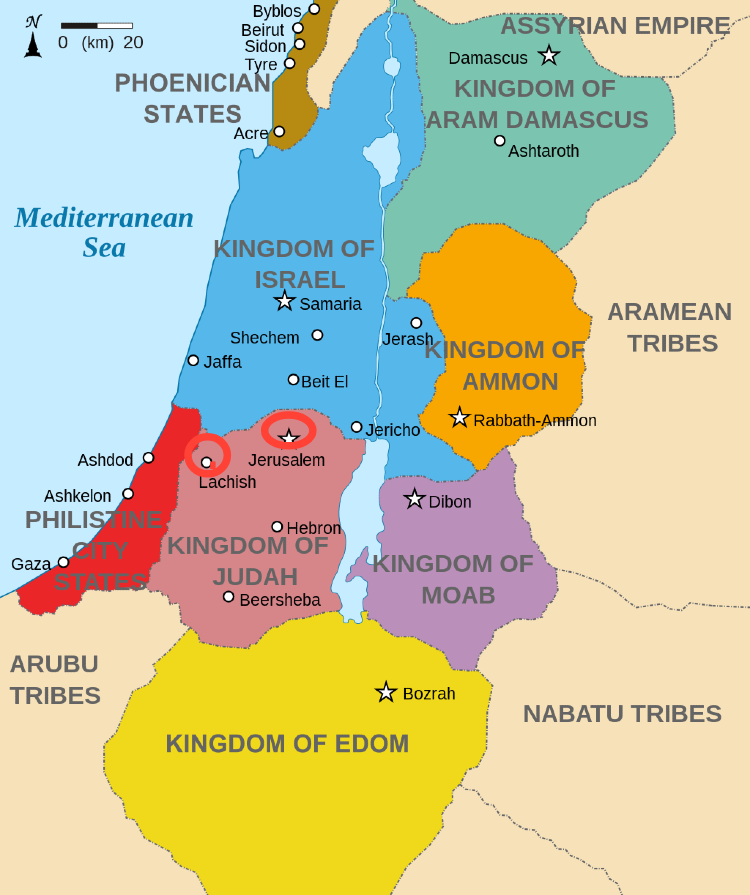
They hit a bunch of cities in Judea more or less at once. We'll talk about two:
The Siege of Jerusalem, and the Siege of Lachish.
Jerusalem is... the navel of the universe, as Jews understand it. Al-Quds, in Arabic– "The Holy."
Lachish is what’s known today as Tell ed-Duweir or Tel Lachish. It’s about 33 miles southwest of Jerusalem.
Here’s the story:
Sennacherib sent part of his massive imperial army to block exits to the walled city of Jerusalem, thus trapping those inside and making it impossible for supplies to enter. At the same time, he brought other troops to attack the nearby city of Lachish.
"Now it came to pass in the fourteenth year of King Hezekiah that Sennacherib king of Assyria came up against all the fortified cities of Judah and took them." (Isaiah 36:1–2)
As the Book of Chronicles tells it:
"Later, when Sennacherib king of Assyria and all his forces were laying siege to Lachish, he sent his officers to Jerusalem with this message for Hezekiah king of Judah and for all the people of Judah who were there. “This is what Sennacherib king of Assyria says: On what are you basing your confidence, that you remain in Jerusalem under siege? When Hezekiah says, ‘God our God will save us from the hand of the King of Assyria,’ he is misleading you, to let you die of hunger and thirst. Did not Hezekiah himself remove this god’s high places and altars, saying to Judah and Jerusalem, ‘You must worship before one altar and burn sacrifices on it’? (2 Chronicles 32:9-12)
So, that's a harsh dig at Hezzie, there, for his subjects: "You're gonna trust this schmuck to keep you safe? The one who smashed all your altars?? Really??"
We'll come back to our friends trapped in Jerusalem in a moment.
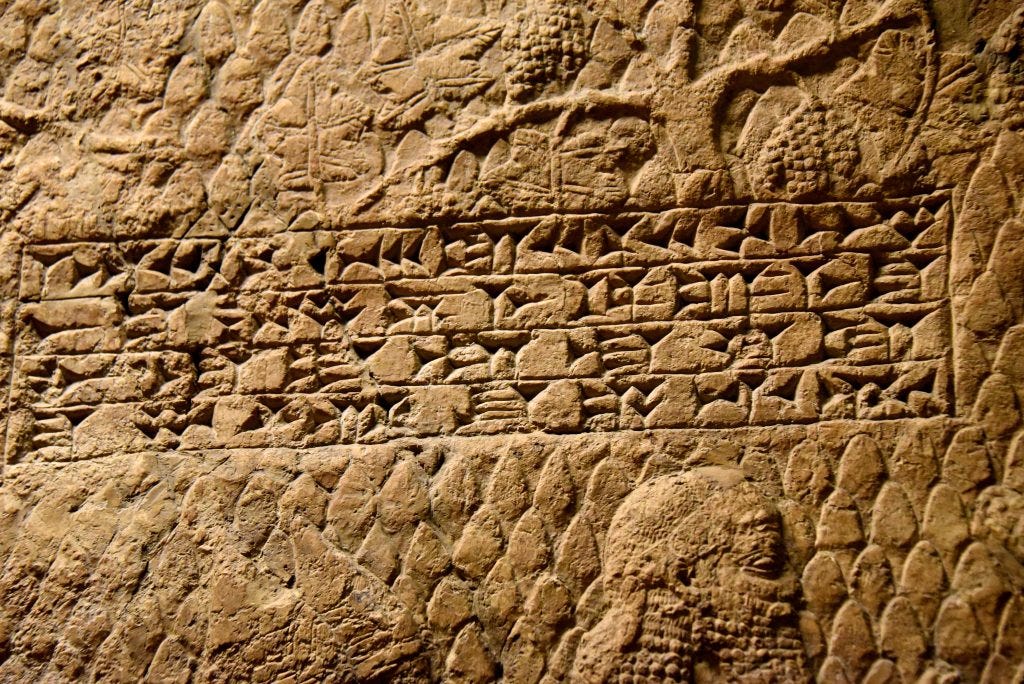
We know from a number of different sources that Lachish siege was Very Bad.
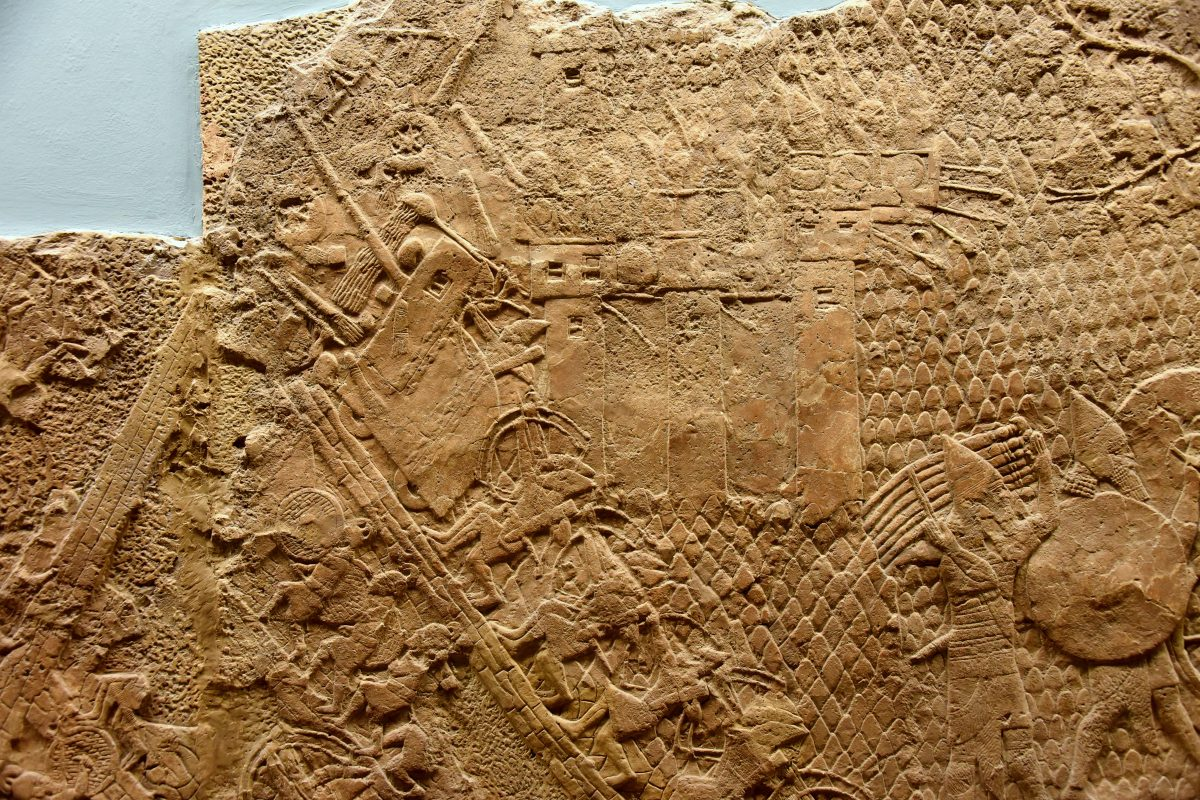
The Assyrian Empire’s army was ginormous and professional; in addition to the usual warriors with spears and archers, they had hired mercenaries throwing stones ("slingers,") and, critically, they had cavalry and chariots and more big Empire stuff. Like: they built a massive ramp (or "siege mound," cf 2 Kings 19:32) up to a weaker part of the wall to better get it with a battering ram–probably built using stones and a lot of enslaved people.
The Judean military force was puny in comparison, and not nearly as organized or professional. Just some local guys, maybe some mercenaries (though if The Sennacherib Prism– below– is to be believed, sounds like some of the latter bailed when they saw how outmatched they were.)
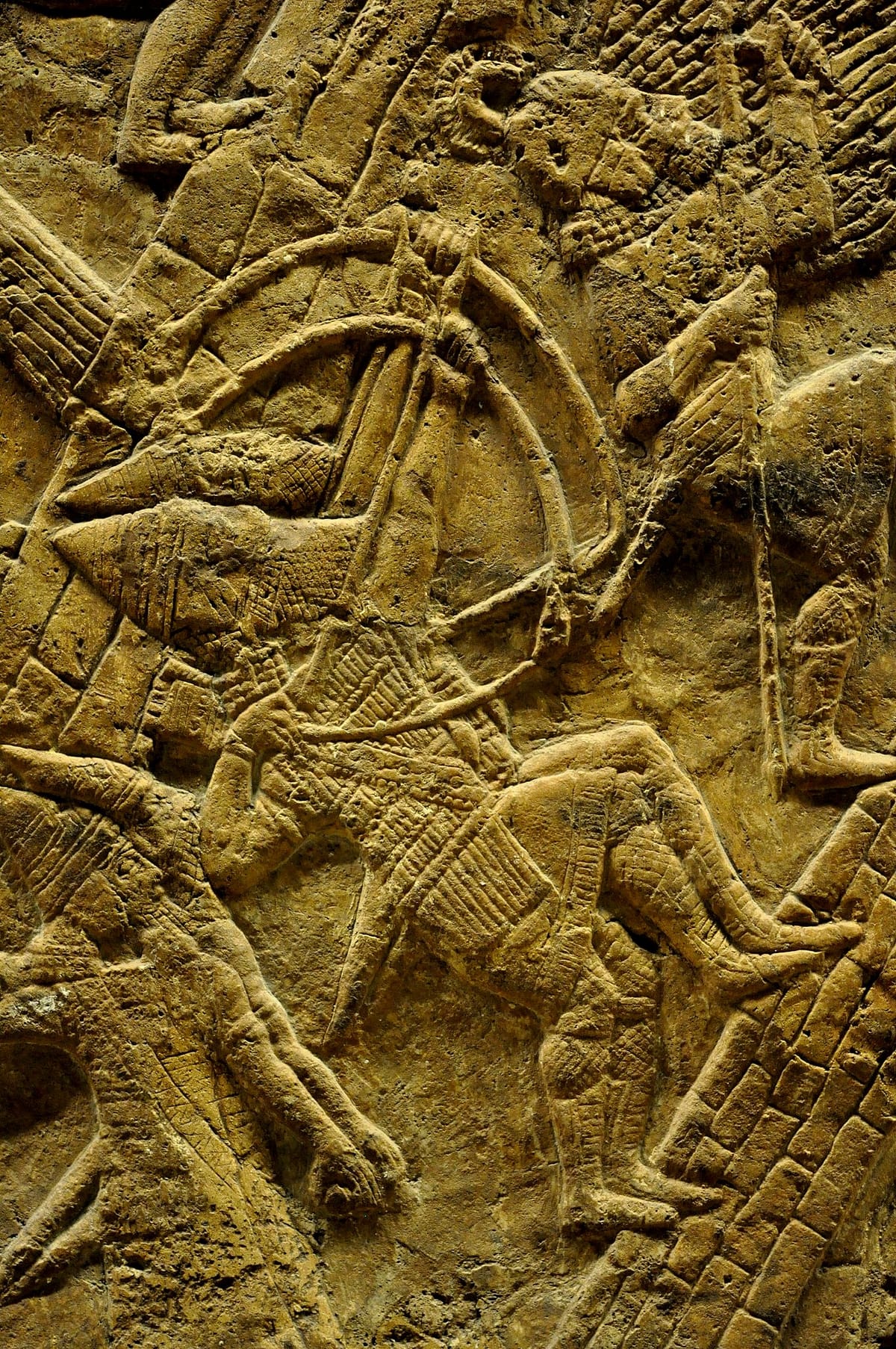
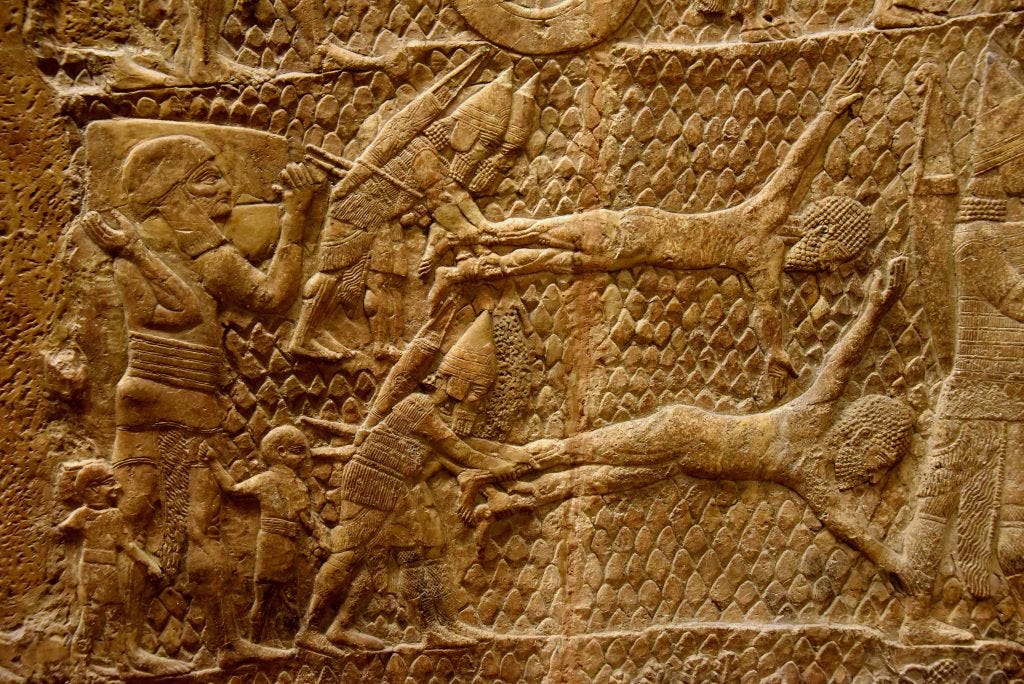
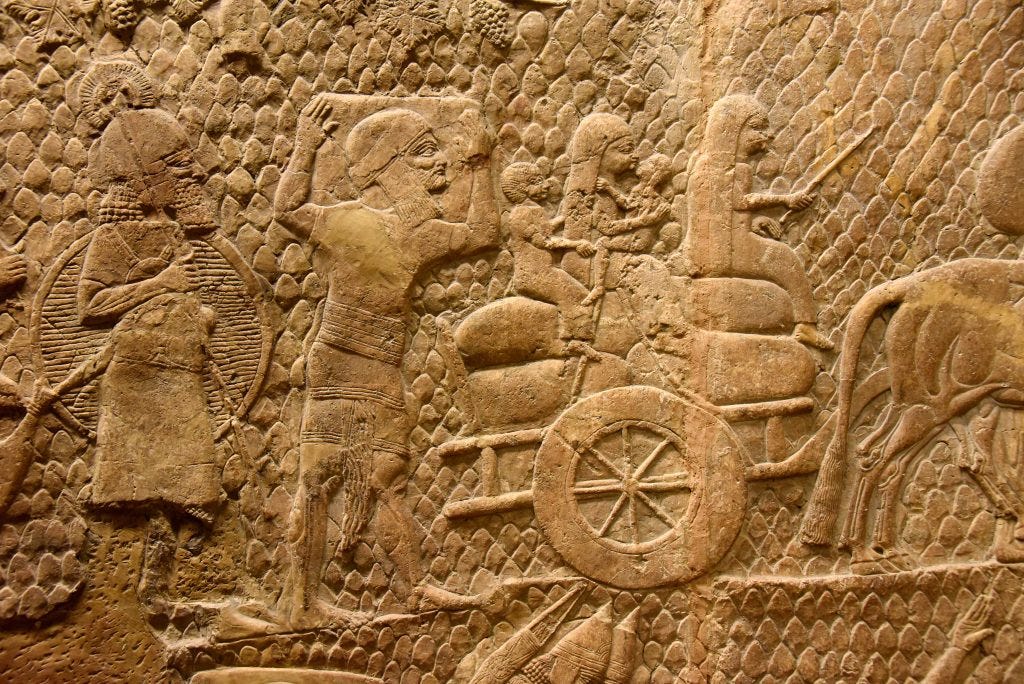
This was such a victory for the conquering army that they made a bunch of gloating commemorative art about it.
In 1850, a white guy in his 20s was literally just digging around [[1]] Iraq (he was British, of course) and uncovered—to Western eyes—the existence of what are now called the Lachish Reliefs; a vivid depiction of the Assyrian army’s siege of the city—one of several non-biblical confirmations of this event.
We see the slingers:
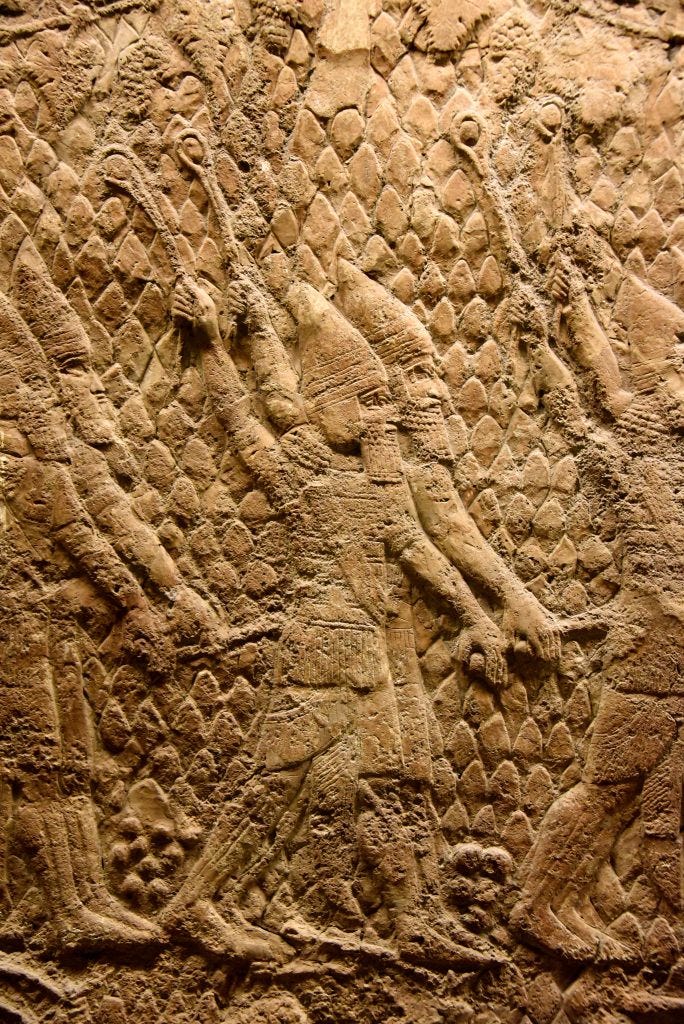
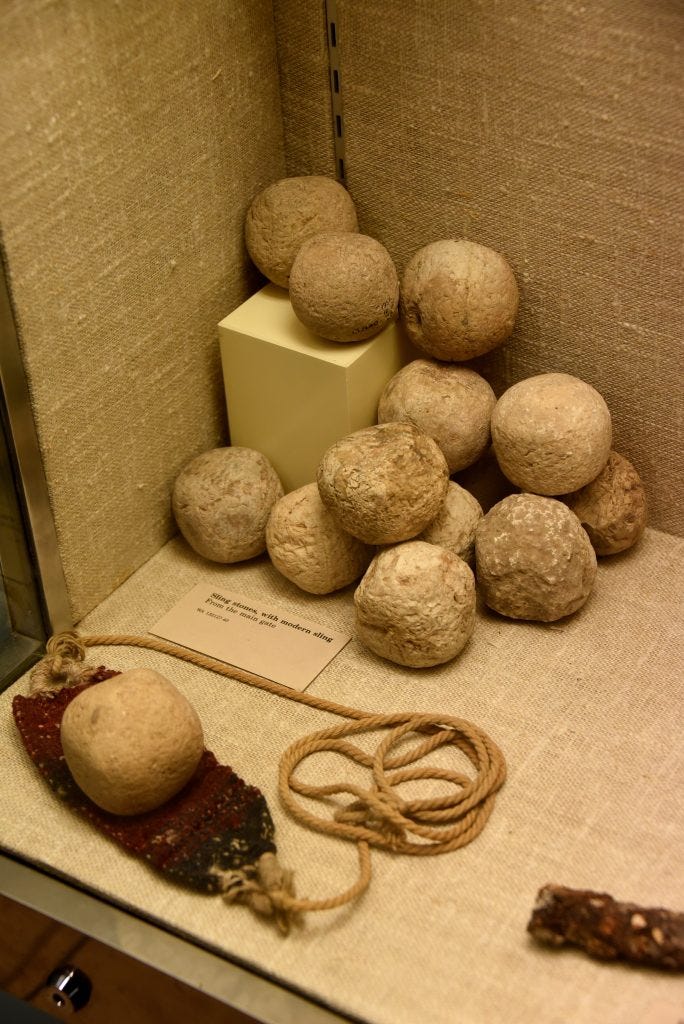
And, here, are slingers from the Lachish Reliefs, and actual slingshot and shots slung from the actual siege of Lachish, found on site. Gives you new perspective on the David and Goliath story, eh? The kid was using a weapon, not a toy. (First image: Bas-relief carving of figures from an ancient Assyrian narrative, in a battle scene, in a shallow relief against a textured background. The figures hold slingshots above their heads. The colors are muted, mostly earth tones.) (Second image: Close-up view of a museum display case. A collection of smooth, light brownish-gray, spherical stones or balls of various sizes are displayed on a light beige or cream-colored textured surface, likely linen or fabric. Some are piled directly on the surface, others are stacked slightly higher atop a small, light beige/cream-colored box. A slingshot-like device, consisting of a woven pouch or bag in dark reddish-brown and black colors, and a coiled length of light beige/tan rope, rests on the same textured surface near the bottom of the display case.)
We see the spears:
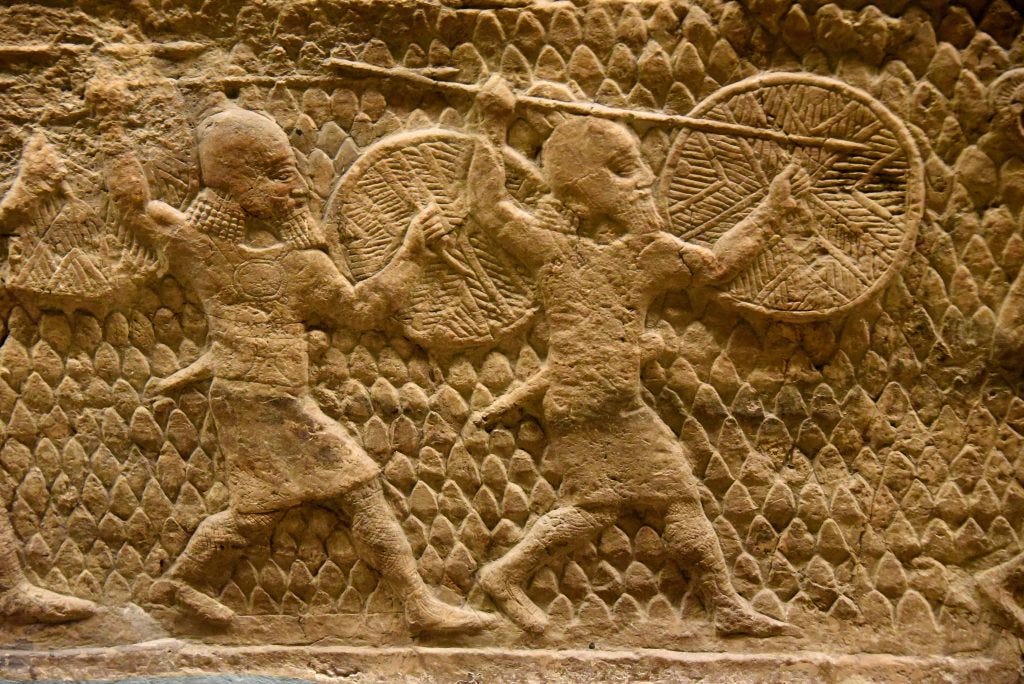
We see ramps with the battering rams, breaking down the city walls:
 Ben Reiff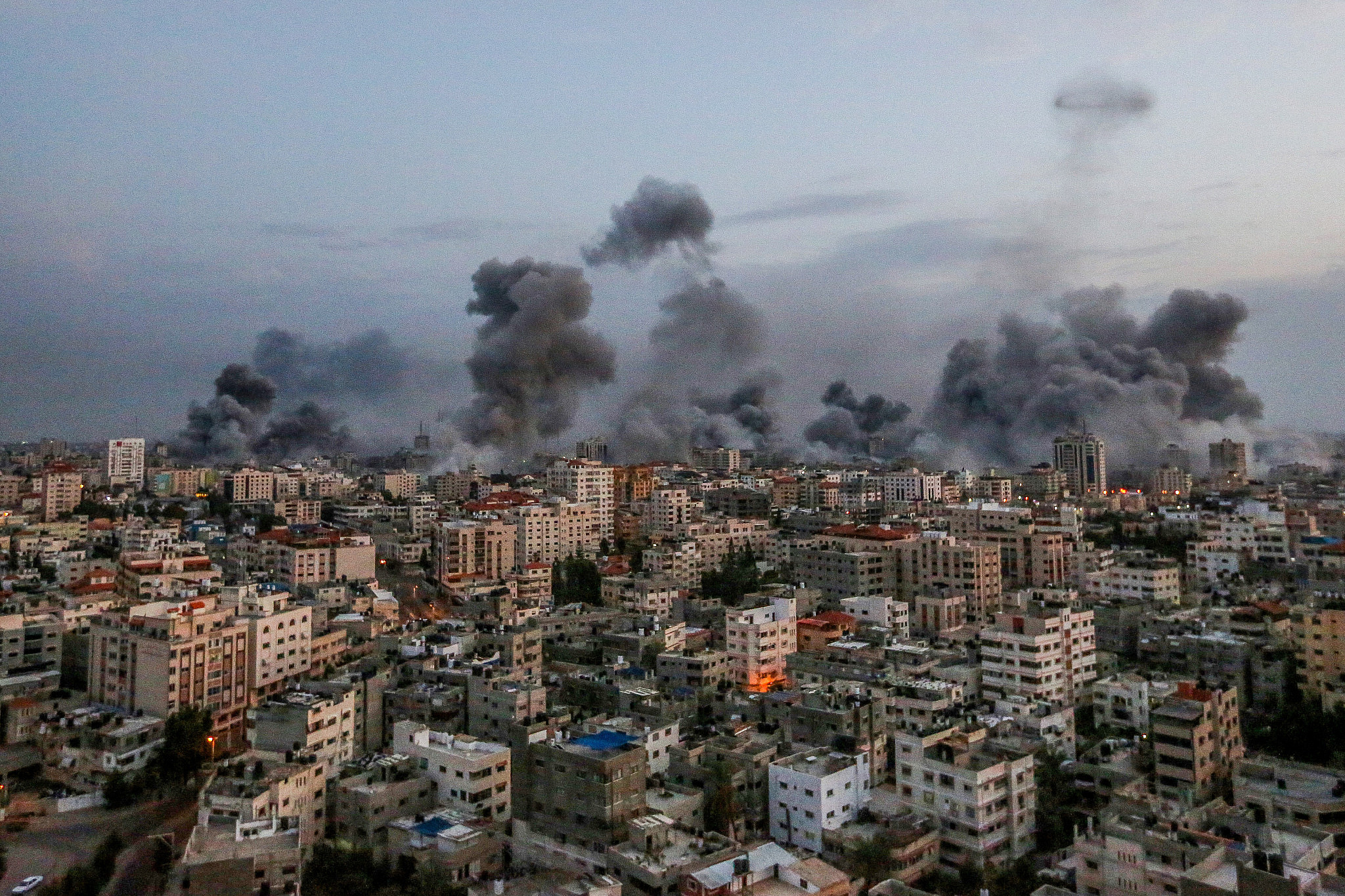
We see the torture after the army won:
 Tal Steiner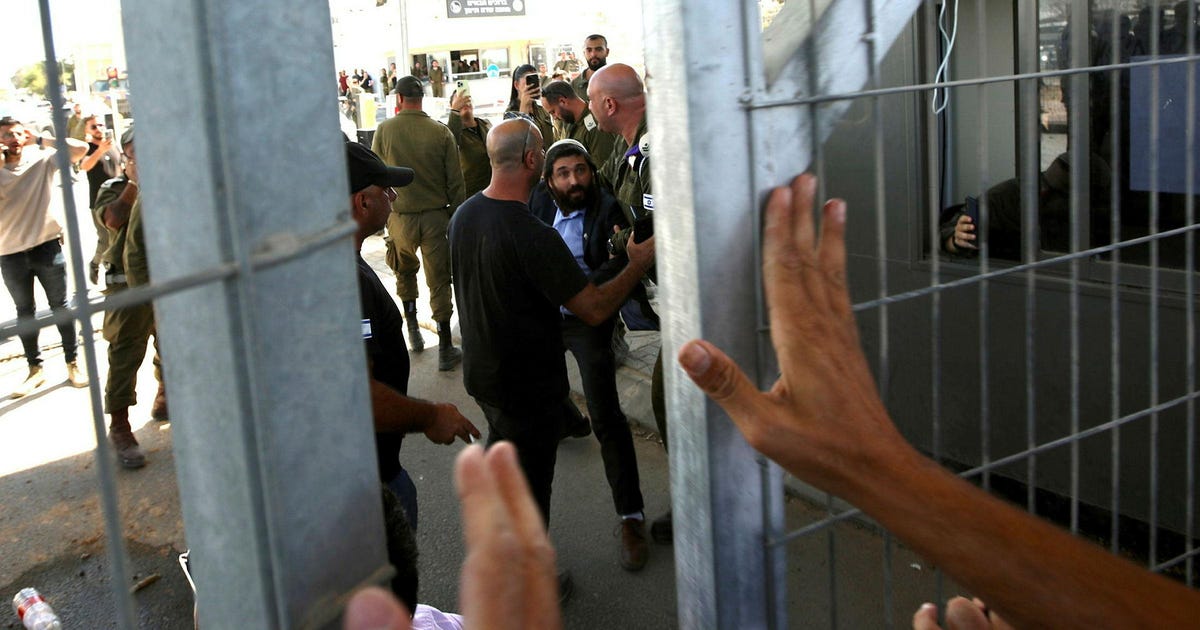
We see families from Lachish forced into exile.
A century and a quarter later, the Neo-Babylonian Empire would destroy the First Temple and forcibly deport about 18,000 people. The Babylonians would just move all the Judeans together– and, as such, even though the whole thing was traumatic and disorienting, Judeans were able to keep their language, social structures and myths. And they were, eventually, able to return back to Judea as Judeans.
But that's not how the Assyrians rolled; they spread out their deportees, tried to make them assimilate into their new regions and lose any particular collective identity that a community may have had. (II Kings 17:6) So the Israelites who were conquered in 722 BCE and exiled / deported largely vanished– hence the "ten lost tribes." (Though, indeed, some refugees did pour down into Judea, creating an important cultural cross-pollination that might have been a key moment in the development in the Torah.) Presumably, many denizens of Lachish suffered a similar fate.

 MEE staff
 Zeena Saifi, Abeer Salman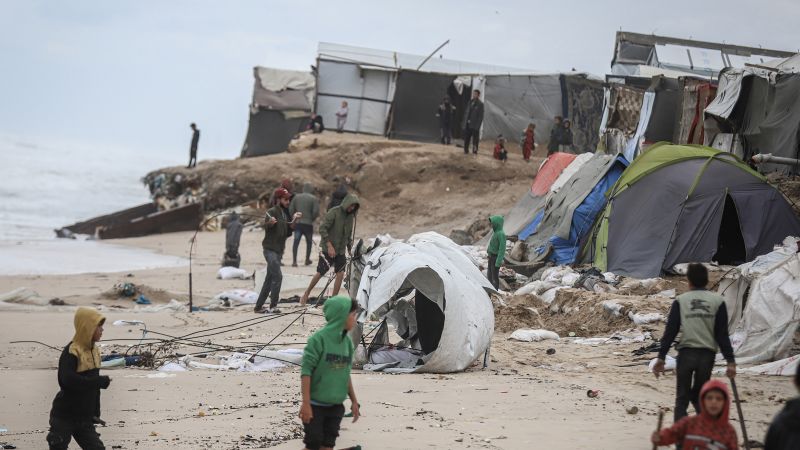
We see the prisoners forced to make supplications before the king:
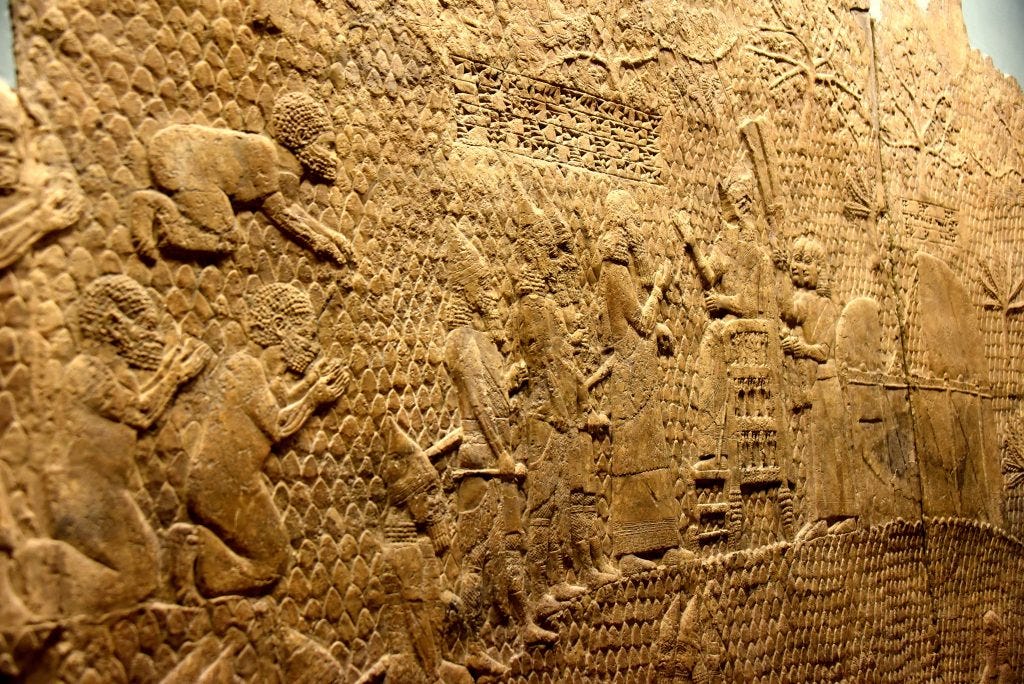
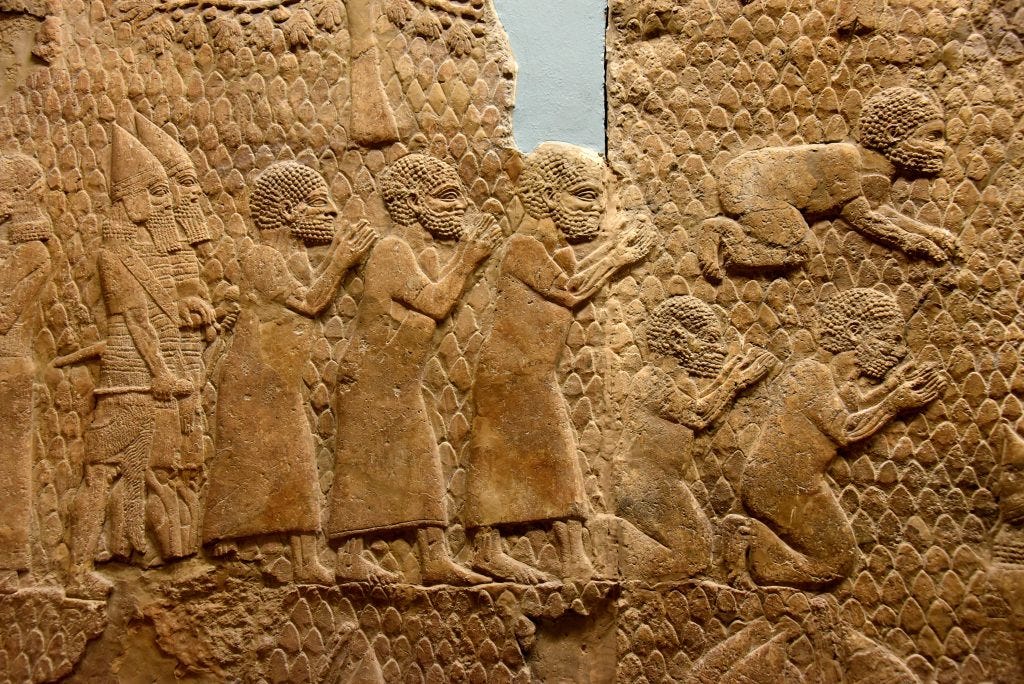
 Noa Shpigel
And then here are Sennacherib’s own words (allegedly); they’re found on what’s called The Sennacherib Prism, an Assyrian Empire document (well, clay tower, of sorts) written in Akkadian cuneiform and originating, as far as we know, in what’s now Iraq:
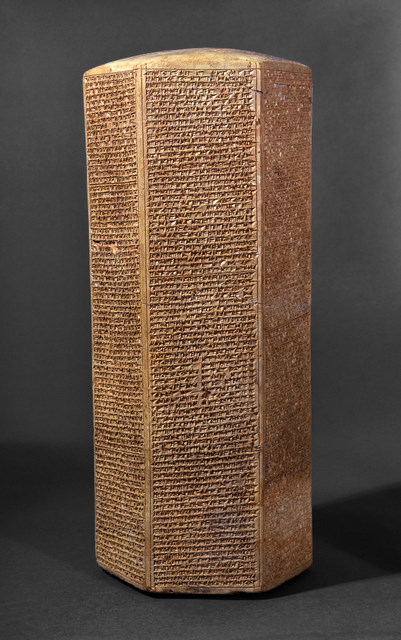
18As for Hezekiah the Judahite, 19who did not submit to my yoke: [I took] forty-six of his strong, walled cities, as well as 20the small towns in their area, 21which were without number, by leveling with battering-rams 22and by bringing up seige-engines, and by attacking and storming on foot, 23by mines, tunnels, and breeches, I besieged and took them. 24200,150 people, great and small, male and female, 25horses, mules, asses, camels, 26cattle and sheep without number, I brought away from them 27and counted as spoil.
(Hezekiah) himself, like a caged bird 28I shut up in Jerusalem, his royal city. 29I threw up earthworks against him— 30anyone coming out of the city-gate, I turned back to his misery....
37As for Hezekiah, 38the terrifying splendor of my majesty overcame him, and 39the Arabs and his mercenary troops which he had brought in to strengthen 40Jerusalem, his royal city, 41deserted him.
In addition to the thirty talents of gold and 42eight hundred talents of silver, gems, antimony, 43jewels, large carnelians, ivory-inlaid couches, 44ivory-inlaid chairs, elephant hides, elephant tusks, 45ebony, boxwood, all kinds of valuable treasures, 46as well as his daughters, his harem, his male and female 47musicians, which he had brought after me 48to Nineveh, my royal city. To pay tribute 49and to accept servitude, he dispatched his messengers. (Sennacherib Prism 3:18-49)
He shut them up in Jerusalem "like a caged bird."
Sennacherib starved them into surrender.
 ABC News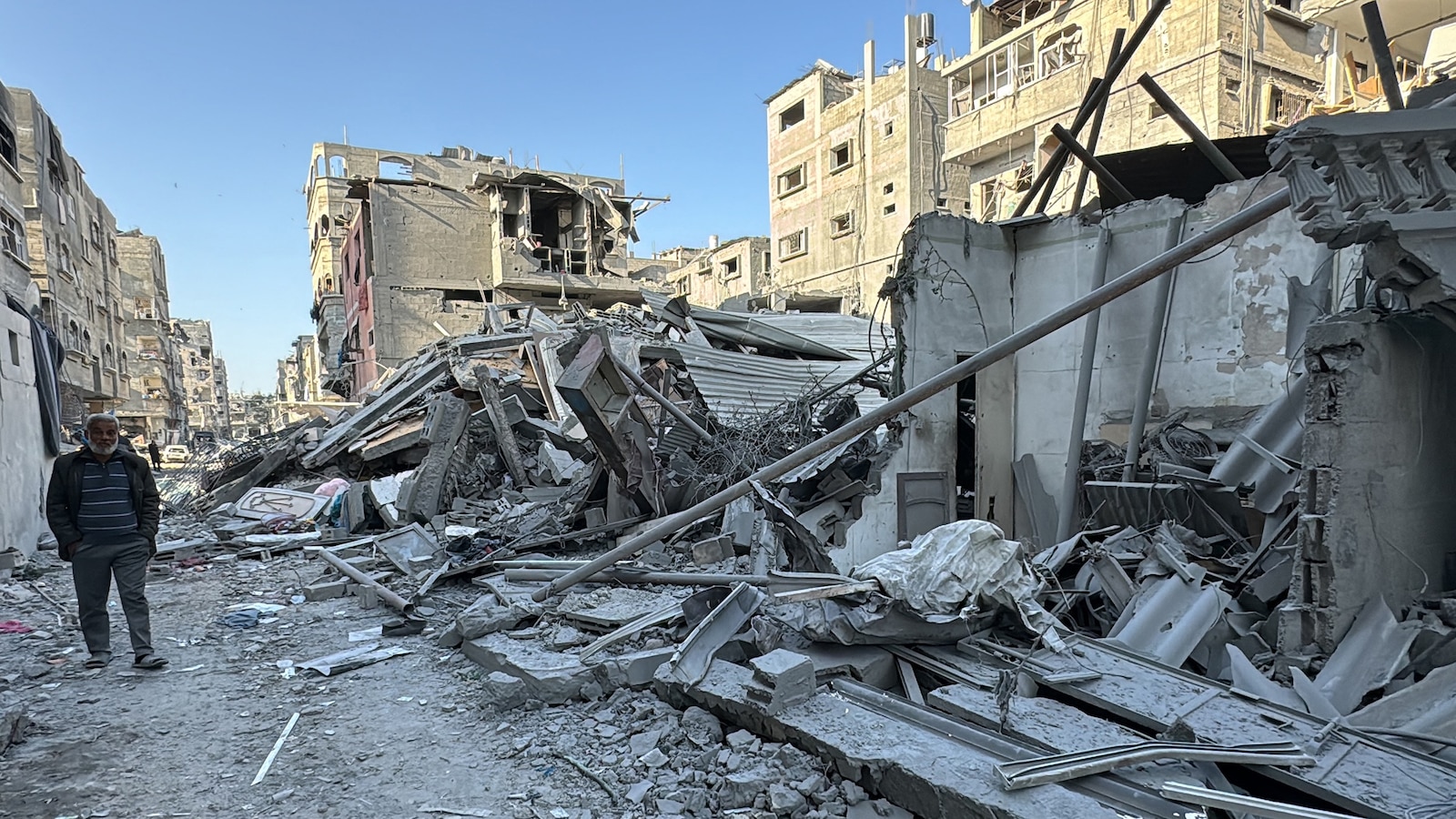

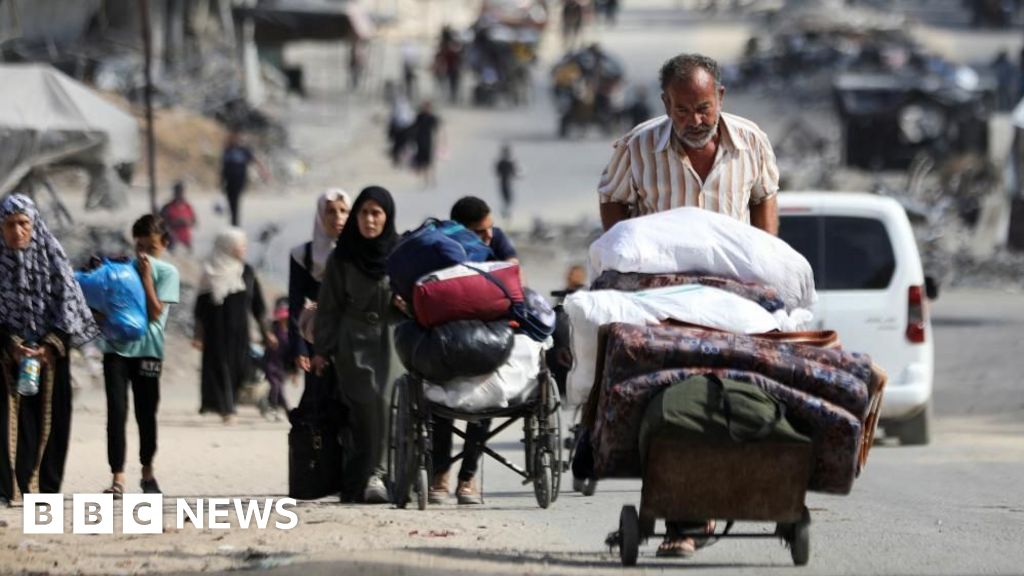
We so often hear stories of glory when one is the winner of war, and of horrors when one is on the receiving end of those same "glories." The Maccabees or the Babylonian Exile. The American Revolution or 9/11.
Fewer people consider the Maccabees from the perspective of the Idumeans and ofthers whom the Judeans conquered after they ousted the Selucids, or that King George III's Proclamation of 1763 reserved the lands west of the Appalachian Mountains for Native Americans.(The US' abject refusal to face its own role as harmdoer is exactly why we're in this historical moment, I think– as I explained at length in my most recent book.)Though the technology of war has changed drastically in some ways, in many ways– so much really hasn't. And maybe in another season it may have felt like heresy to write this (not terrifically subtle) piece, today it just feels morally urgent to tell the truth as I understand it.
I think the only lesson here is about the abhorrent choices some human beings are capable of making when they have power. Especially if they're desperate to keep it, or want more of it.
 Owen Gleiberman
Watch the film here for the receipts to what you read in Life is a Sacred Text a year ago.
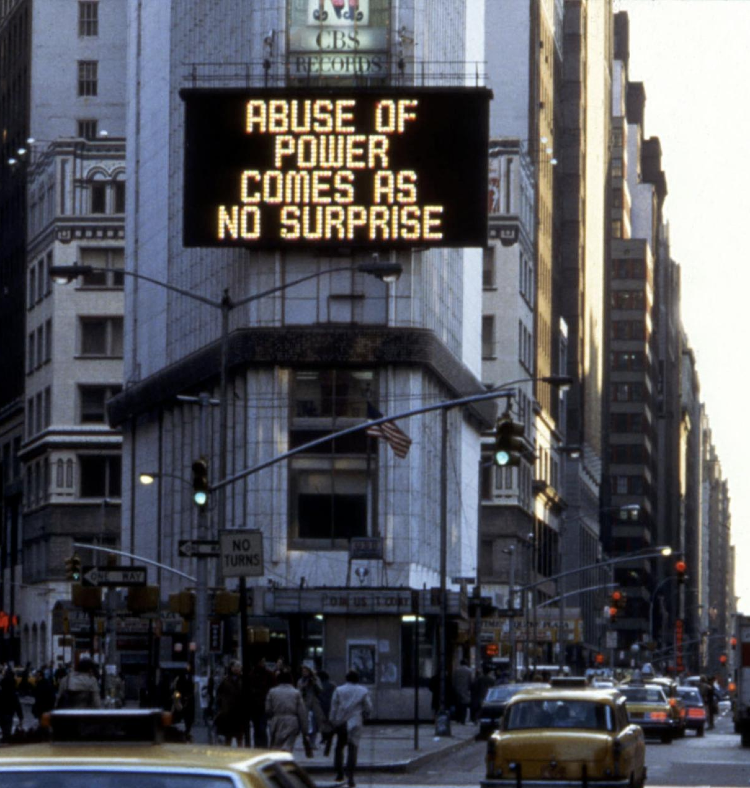
And what we lose when we forget the essential truth at the heart of every teaching:
That we should wish only for others what we might wish for ourselves.
Everything else is commentary.
Let's close with a piece to which I've returned regularly since I first read it in 2016 by the Israeli human rights lawyer Michael Sfard:
It manages to be (as I am, in my way) both sardonic and hopeful:
One day the occupation will end. It will probably happen in one fell swoop. And when it happens, it will suddenly emerge that everyone was against it. That the politicians had actually worked to end it, that the journalists strove indefatigably to expose its injustices, that the cultural institutions condemned it courageously...
One day the occupation will end, because regimes of this kind are not viable. They are bound to fall, because regimes of suppression, almost by definition, are unstable.
The world is driven by diverse forces. We vividly see and feel the political, economic and military forces daily. But there are also less visible forces, whose mode of operation is less overt.
One of them is actually an idea:
that all human beings are equal and that all deserve rights because they are human beings.
That idea is responsible for the greatest and most important revolutions in history.....
And it will bring about the end of the occupation.
 Michael Sfard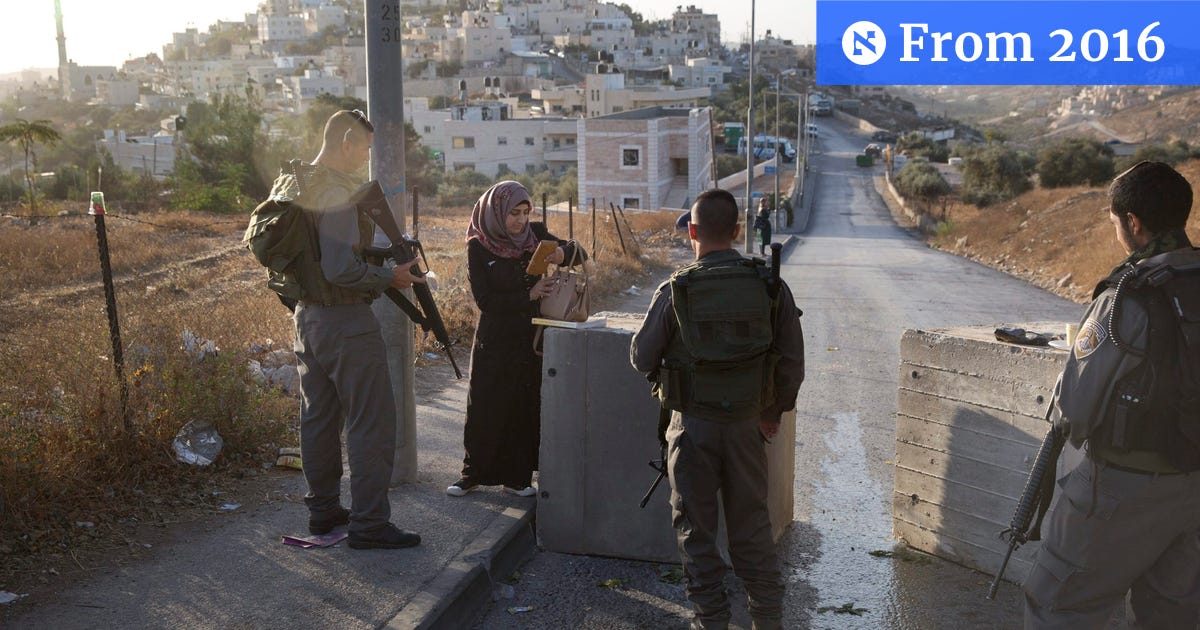
🌱
And, once again, a reminder that you can gift everyone on your list nourishment for their heart, soul and noggin:
Offer someone(s) you love gift subscriptions – 10% off through December!
Get in on group subscriptions! For 20% off.
And personal subscriptions are also 10% off through the end of the month:

A note on the subscription model:
I want my work to be as accessible to as many people as possible, in as many ways as possible. That's why the Monday essays are free, and why we donate subscriptions to anyone for whom paying is a barrier to the House of Study posts.
I also believe people should be paid fairly for their work. Needless to say, these two values sometimes seem to be in conflict, but I do what I can to find a fair balance. I offer many resources for free, and charge for others. When you donate generously or pay at the top of our scale, that helps support the work I do, provides access for those who have fewer resources, pays for the infrastructure and the technical and practical support that it takes to do this, and helps us keep the work sustainable.
And as always, if you want in to the Thursday space but paying isn't for you now, just email support@lifeisasacredtext.com and we'll hook you up.
And if you’d like to underwrite one of these donated subscriptions, you can do so by signing up at one of the higher subscription points.
And if it resonated with you, please share this post.
Sending a big pile of blessings and goodness your way. 💕
[[1]] His bio– here– is a portrait of the kind of life that could only happen if one is born an upper-class English gent in the 19th century (or the contemporary scion of South African emerald mines, maybe). Apropos of some things, perhaps, this has been on my TBR for a while.