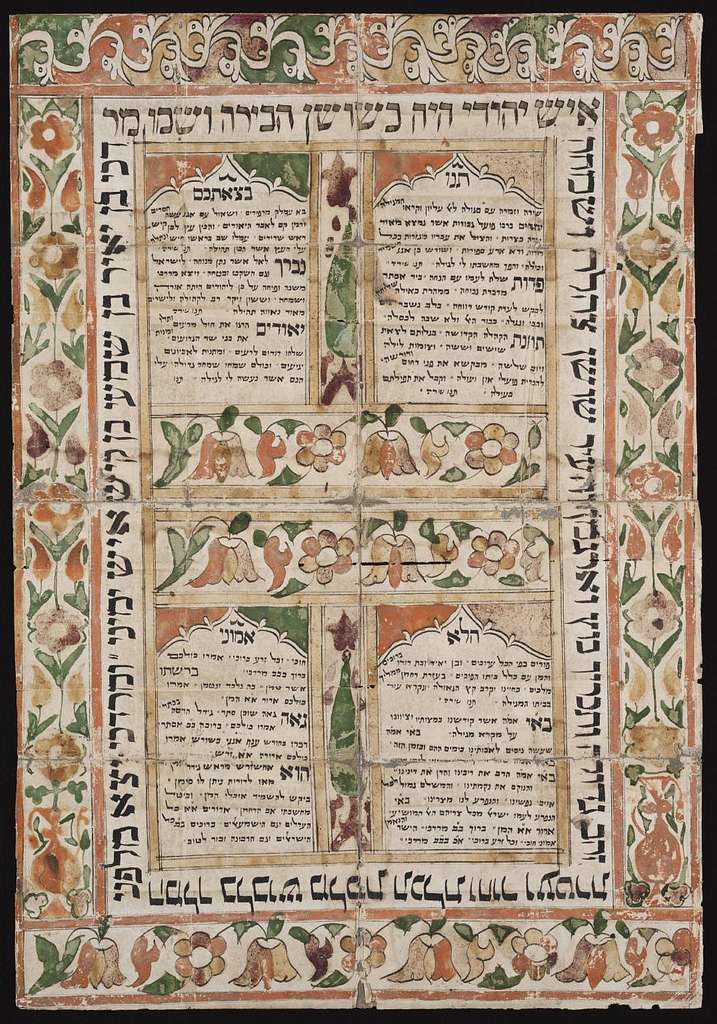
on the other trafficked girls in Esther
because the girls in the harem matter, too
This is Life as a Sacred Text 🌱, an everybody-celebrating, justice-centered voyage into ancient stories that can illuminate our own lives. It‘s run on a nonprofit, so it’s 100% NAZI FREE. More about the project here, and to subscribe, go here:

big trigger warnings for sexual violence, friends (CSA)
And yes, this story resonates today in ways I wish it didn't.
Yes, we're talking about Epstein-related matters here.
But we've seen what happens when we don't face the truth about things that matter.
So let's keep telling the truth so we can make a new, more whole tomorrow.
You may know that the story of the Book of Esther begins with King Ahasueres deposing his wife Vashti because she won't subject herself to a huge party full of drunken men. Yep.
So yeah, after Ahasuerus deposes Vashti for not coming to his drunken bacchanal ("and the rule for the drinking was, 'no restrictions!'" says the text), one can only assume for her own safety because "showing off her beauty" to a room full of hammered men, each of whose every wish have been complied with by the palace stewards (1:8) might not feel safe– he needs a new queen. (All these verses will be from chs 1 and 2):
The king’s servants who attended him said, “Let beautiful young virgins be sought out for Your Majesty. Let Your Majesty appoint deputies in every province of your realm to assemble all the beautiful young virgins at the fortress Shushan, in the harem under the supervision of Hege, the king’s eunuch, guardian of the women. Let them be provided with their cosmetics. And let the girl who pleases Your Majesty be queen instead of Vashti.” The proposal pleased the king, and he acted upon it.
First of all, yeah, they did say "beautiful young virgins" twice in two verses, you're not making that up. Naarah specifically has the connotations of youth. How young? Rabbinics define this as pubescent. Before she has reached full physical maturity. A child.
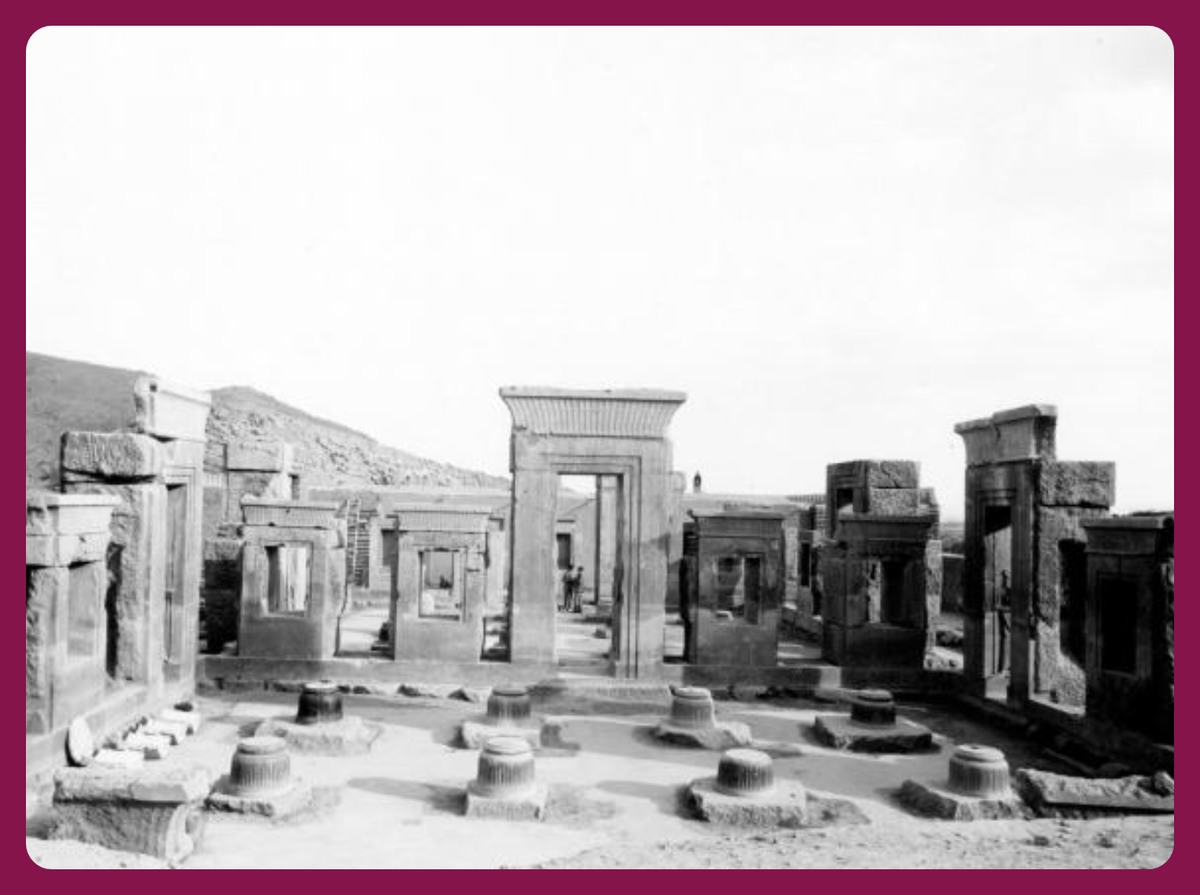
(As tempted as I am to fall down the "exactly which scholars think the Book of Esther was written in what time period and what exactly do we know about what that word meant in that culture exactly then" rabbit hole– and you know I CAN – I am not gonna.)"Every province"
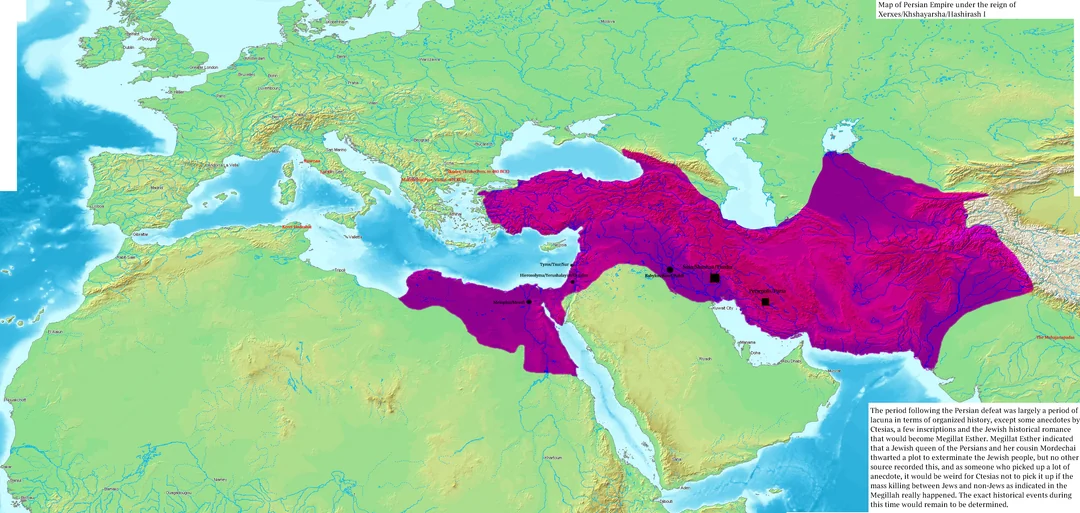
Ahasuerus... reigned over a hundred and twenty-seven provinces from India to Kush.
Kush, you may remember, is Sudan.
It's generally believed that the character of Ahasuerus is based on the historical Xerxes I, the grandson of Cyrus the Great. (That timeline would track, too, Xerxes was crowned in 486 BCE. Mordechai, the Book says, is the great-grandson of someone who was exiled by the Babylonians in 586 BCE, and here he's old enough to be a parent figure to the fully-ish grown Esther).
This would be a map of Xerxes' empire– which, wouldn't you know it, Sudan to India, right there.


(Obviously white supremacy wasn't a thing then and their construction of race would be very different from ours, but when they say "all the beautiful young virgins" from every province? I want you to picture a lot of girls who are a lot of different shades of Black and Brown. Not, you know, this.) (Needless to say.)
All of them are captured by agents of the State— "deputies" – to take these girls from their families and get them to travel sometimes exceedingly far distances so that the king can decide if they "please" him.
I'm sorry. But this is the text that we have. Even as we still in many places celebrate this holiday by having girls dress for a "beauty contest" for a man in power and call it adorable. Is it time that we're more careful with our children of all genders and these paradigms?
(I'm not saying we shouldn't seek kids' appropriate version of all the tales! But I AM saying that all kids of all genders should read this wonderful book):
 Hidden Heroine: Queen Esther in Children’s Books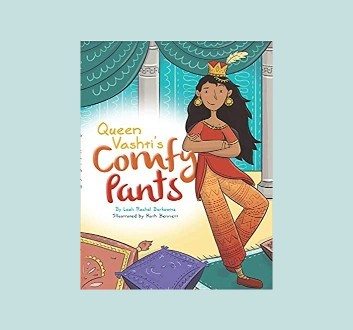
And yes, our girl Esther was trafficked, too.
When the king’s order and edict was proclaimed, and when many young girls were assembled in the fortress Shushan under the supervision of Hegai, Esther too was taken into the king’s palace.
We don't know the names of any of the other girls. There aren't any midrashim on them, either, not as far as I know. I have been looking for them– in 2023, my then-lieutenant on organizing Jewish clergy around abortion activism (the always-wonderful now-Rabbi) Naima Hirsch Gelman and I did some work on this, and couldn't find anything. The Rabbis love to drash on everything. Anything! Every detail, every character. And there are an entire literal harem of empire of girls here about whom they evince zero evident curiosity.
But yes, this is a story about the trafficking of girls by men in power.
And once Esther is chosen, we literally never hear about them again.
But in my midrashic imagination, there is another possibility.
Esther 9:29 tells us that Queen Esther, daughter of Abihail wrote, with the full authority of the Crown, to the whole Empire. With words of "truth and peace."
In my midrashic imagination, she didn't just speak truth for her own people and peace for her own people.
In my midrashic imagination, she was chosen quickly and used her power to protect all these other girls.
She got access to the quill and was able to keep them safe.
She was able to use royal treasury funds to send anyone home who wished to, and to keep anyone at the palace who wished to.
She used the money and power she had access to not to undo, but to transform. And to create a new future moving forward for the girls who had already been harmed.
She could do nothing, or she could do something. So in my midrashic imagination, some of what Esther wrote was for, and about, and in solidarity with, and centering, them.
What future will we write, here?
Share this post
 Share on Bluesky
 Share on Threads
 Share on Facebook
 Share on Mastodon
 Share on Reddit
 Share on LinkedIn
 Share on Email
And you'll get amazing goodies to nourish your heart, soul and brain every single week!
And as always, cost shouldn't be a barrier to Torah. If paying isn't for you right now; life@lifeisasacredtext.com and we'll hook you up.

GOOD STUFF FROM THE ARCHIVES:
History
 Rabbi Danya Ruttenberg
Satire
 Rabbi Danya Ruttenberg
Lilith and Vashti! Esther and Eve!
 Rabbi Danya Ruttenberg
Different ways of making sense of the hardest chapter:
 Rabbi Danya Ruttenberg