The Torah, Written
Celebrating the End of an Era

And the Children of Israel wept for Moses in the Plains of Moav for thirty days; then the days of weeping in mourning for Moses were ended.
Now Joshua son of Nun was filled with the spirit of wisdom, for Moshe had leaned his hands upon him, and the Children of Israel hearkened to him and did as God had commanded Moshe.
But there arose no further prophet in Israel like Moshe, whom God knew face to face, in all the signs and portents that God sent him to do in the land of Egypt, to Pharaoh and to all his servants, and to all his land; and in all the strong hand and in all the great, awe-inspiring [acts] that Moshe did before the eyes of all Israel.
At the beginning of God’s creating of the heavens and the earth—now the earth was Confusion and Chaos, darkness over the face of Ocean, rushing-spirit of God soaring over the waters—God said: Let there be light! And there was light. God saw the light: that it was good. (Deuteronomy 34:8-12, Genesis 1:1-4)
You guys, we finished the Torah. That's pretty cool.
Even with all the other horrors happening out there right now, let's take a moment to celebrate this milestone?
(And in case you missed it, this, from yesterday:)
 Rabbi Danya Ruttenberg
When this project began in . . . June of 2021, I had no clue that we'd go this long, that we'd finish Torah, that the community would continue to grow and grow as it has, or that the next chapter (more on that next missive) would be so exciting– or needed in this moment.
I knew then that we'd go at whatever pace made sense, and indeed there's been a lot to see along the way.
If my estimates are correct, Life is a Sacred Text published an average of 3.5 posts per Torah portion, because there was just... plenty to investigate, to uncover, side quests to take, history to nerd about, midrash to gasp about (especially on House of Study Thursdays), and more.
Of course, if there's anything that Deuteronomy's taught us, it's that before we move forward, we have to pause and reflect on where we've been. So with that, should we start by going through everything that's happened in the last Book of the big five?
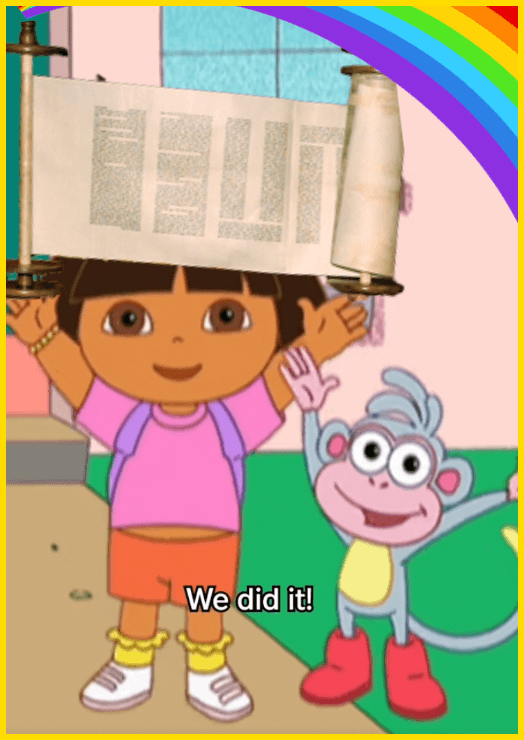
And yes, we always need joy, and all the more so now, so say it with me:


Last fall, we began talking about how, in Deuteronomy, Moses tells the stories of Exodus and Numbers to the next generation before they enter the Promised Land. Then we looked at the Book's likely creation in King Josiah's court, and its interest in getting us on board with the centralization of the one Temple in Jerusalem.
We talked about what was (and probably wasn't) considered idolatry. Who the ginormous (literally giant) Anakites were. The prevalence of Asherata worship during the First Temple era; how the Torah and Talmud discussed women and witchcraft and what Jewish women's folk ritual really looked like. We also interrogated the notion that tattoos are unquestionably forbidden in Jewish tradition.
There was a second go-round of the Ten Commandments – with some noticeable differences. We also looked at what "going beyond the letter of the law" means under authoritarianism; why God is not a vending machine and your prayers are not a quarter; and how to make sense of the Shma, the command to listen, to hear.
We looked at Jewish betrothal and the some of the wild backstories behind some wedding customs as well as how the tradition addresses sexual assault –both its problems and how it beats some of our contemporary frameworks.
And then we get into the justice-centered meat of Deuteronomy: How to navigate the world that needs both care today and change for tomorrow; what redistributive justice (philanthropy) should look like in practice; questions of communal responsibility when harm happens and, that later xenophobia notwithstanding, the Exodus included inter-communal solidarity. In the span of a three verses, we saw that pursuing justice, justly means that how we do what we do matters; the importance of accountability in justice systems; and what's required of an ethical judge.
We considered why the Rabbis didn't want to murder a mouthy tween, and how our approach to text can teach us a lot about life.
We saw that we're commanded to make sanctuary to protect people from the threat of communal violence and how holy rejoicing, too, is about making sure everyone is enfranchised.
And then, towards the end of the Book, we had a chance to learn from the imperfect liberation theology at the heart of Deuteronomy and see the truth that "choose life" is the core of the covenant. We unpacked the loaded theology of blessings and curses, and, at last, saw Joshua's succession and the death of Moses.
And then, back around again, to everywhere else we've been –
To say nothing of guest posts during the Deuteronomy era!
- Jack Zaientz on Jewish monsters
- Rabbi Ben Luks-Morgan on the enduring trans presence in Jewish text
- Fat Torah from Rabbi Minna Bromberg
- Lexi Kohanski on choosing herself, Jewish continuity and who's allowed in God's community.
- Kaitlin Curtice and Patty Krawec on how to read stories anew.
So many other things also happened in the Deuteromyear, like - That time the Kabbalists tried to kill Hitler via chicken sacrifice + airplane magic
- Managing Big Feelings in the Trump era and some foundational lessons to hold with us
- How a spiritual practice (not a religious one, per se) can fortify us at this political moment
- Some organizing notes, as well as a list of ways to take action and make sure you and those around you are cared for.
- How our body echoes the cosmos
- A letter to Jews, on the Gaza famine, and a revision of On Repentance and Repair in light of the Gaza genocide
- How art education taught me to read text
- Maimonides on how to be a decent human being and the question of how much people can change
- A historical / philosophical explainer on Jewish denominations
- ... And a whole lot more there isn't space to mention here.
In any case, I couldn't be more grateful to have you on this ride with me, or more thrilled to be moving into our more unfettered next chapter together.
Thanks for being part of this with me.
Collective liberation or bust.
❤️
RDR
QUESTIONS:
- Where did you start showing up along this Torah journey?
- Did being part of this process impact you in any way?
- and, most importantly: What's your nomination for the four-emoji set representing Deuteronomy?
Share this post
 Share on Bluesky
 Share on Threads
 Share on Facebook
 Share on Mastodon
 Share on Reddit
 Share on LinkedIn
 Share on Email
Please remember that, without Substack's built-in network, we need the community – you – more than ever to amplify conversations. Thank you. ❤️
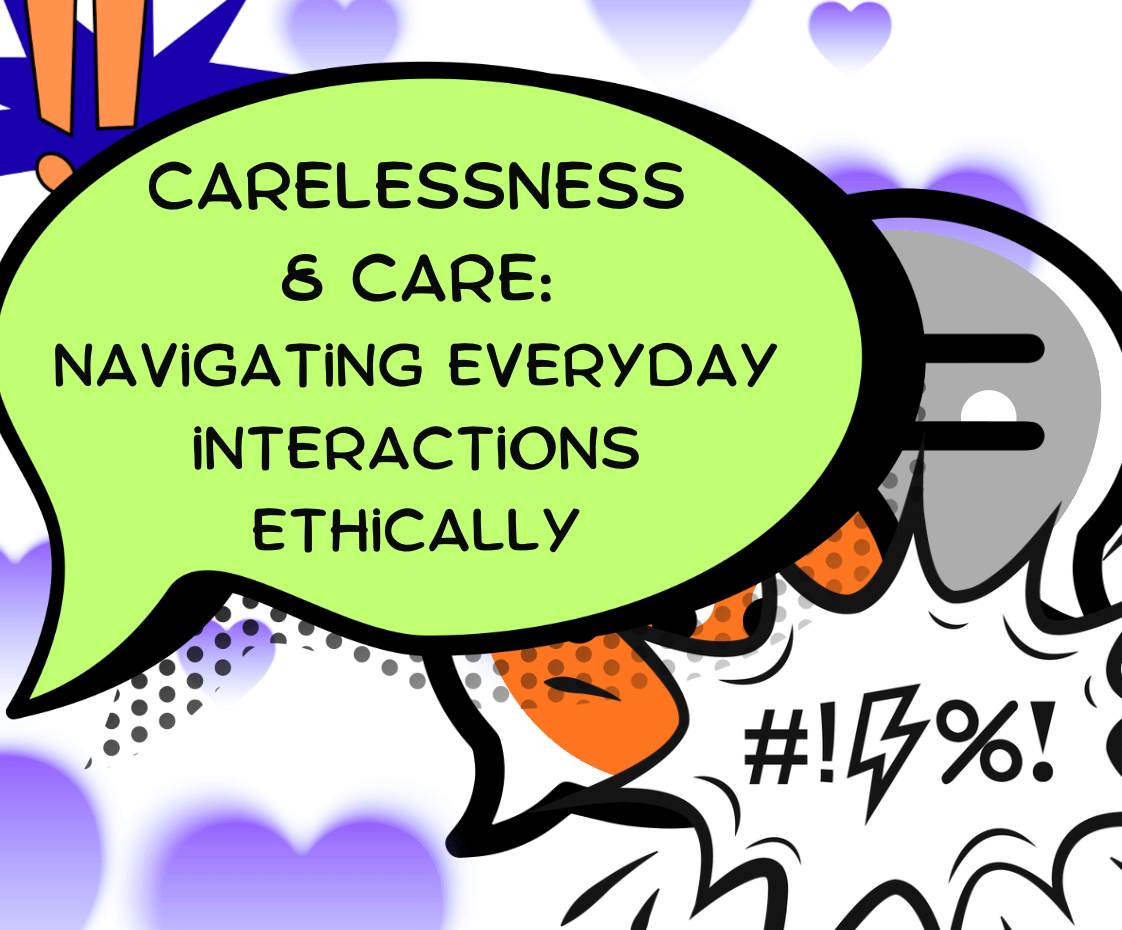
It's easy to attempt to do right by our friends, family, loved ones, acquaintances, and the people we simply encounter day-to-day– and often hard to get it right. Join us for a lively, interactive conversation around the ethics of interpersonal interactions and you might find that it proves transformative in the next sticky, or almost-sticky, situation.
February 8, 2-3:30ET, 11-12:30PT

A reminder about the subscription model:
I want my work to be as accessible to as many people as possible, in as many ways as possible. That's why the Monday essays are free, and why we donate subscriptions to anyone for whom paying is a barrier to the House of Study posts.
I also believe people should be paid fairly for their work. Needless to say, these two values sometimes seem to be in conflict, but I do what I can to find a fair balance. I offer many resources for free, and charge for others. When you donate generously or pay at the top of our scale, that helps support the work I do, provides access for those who have fewer resources, pays for the infrastructure and the technical and practical support that it takes to do this, and helps us keep the work sustainable. ❤️ 🌱
When you sign up for the House of Study, you get deep dives every Thursday, Ask the Rabbi Q & As, monthly Zoom Salons IRL, access to over 4 years of archives, a study partner if you want one, and so much more-- and you DON'T have to get more email if you don't want! Don't you deserve all this nourishment and support??
As always, if you want in on the House of Study, but paying isn't for you right now, email support @ lifeisasacredtext.com and we'll hook you up.
Support independent work committed to telling inconvenient truths: