
This is Life as a Sacred Text, 🌱 an everybody-celebrating, justice-centered voyage into ancient stories that can illuminate our own lives.
It‘s always human-authored, and it's run on a nonprofit, so it’s 100% NAZI FREE. More about the project here, and to subscribe, go here:
This newsletter is a reader-supported publication.
Paid subscriptions allow our tiny team to keep doing this work.
If you want in to the House of Study but paying isn't on for you right now, reach out and we'll hook you up, no questions asked. Always.
You've probably heard talk about the Land Back movement, the restoration of land to its original Indigenous owners. But so little of the popular conversation gets into what happens after some lands are returned, beyond specific cases here and there.
So apropos of Native American Heritage Month and a week of considering founding stories (and: I am so, so thankful for you all ❤️), I thought this would be a nice time to look at an important topic that's about justice, spirituality, and all of our collective wellbeing.
First of all, the hard background:
Over the centuries of colonialism, genocide, treaty violations and land grabs, the US seized 1.5 billion acres of land from Indigenous Turtle Island* peoples, 99% of their historical land base.
*Turtle Island: a name used by some Indigenous peoples to refer to North America, based on the creation traditions of some northeastern woodlands tribes. When talking about this land – especially in today's context– sometimes it makes the most sense to refer to it with a name other than the current nation-state or a 16th c. guy named Vespucci. (I will use Native American and Indigenous [to Turtle Island, implied] interchangably, as I have seen to be the practice among many tribal folk today.In many ways, the Land Back movement began at the same time as Native American forced displacement.
For example, a small group of Cherokee who'd managed to evade the Trail of Tears ethnic cleansing succeeded– in the first years right after the Indian Removal Act– in buying 50k acres of their original land. They did this with the help of a white man they'd adopted, since Native people could not hold a land title in North Carolina at that time.*
*I'm sorry, I just love this detail: The land area of the Eastern Band of Cherokee Indians is known as the Qualla Boundary. Why? Evidently "The name is from the Cherokee word kwalli (old woman), because an old Cherokee woman, Polly, lived [at the border]." All respect, Polly.Share this post!


“In the settler mind, land was property, real estate, capital, or natural resources. But to our people, it was everything: identity, the connection to our ancestors, the home of our nonhuman kinfolk, our pharmacy, our library, the source of all that sustained us.”
– Robin Wall Kimmerer, Braiding Sweetgrass
The history of the #LandBack movement is many books long; for our purposes, the story really begins inching from activism to results around 55 years ago. Between 1970 to 2020, Congress enacted 44 statutes transferring ownership interests in public lands to federally-recognized Native tribes.
And generally speaking, when the conversation turns to returning land to its original stewards, the focus is generally on
- federal and state, sometimes municipal, land holdings–
- This includes (but is not limited to) public land that moves through various arms of land acquisition, disposal, and and exchange authorities every year
- including (but not limited to) tax-forfeited lands
- lands bought for /with a tribe with the help of a nonprofit doing fundraising
- ownership transfers and bequests by private landowners with land holdings.
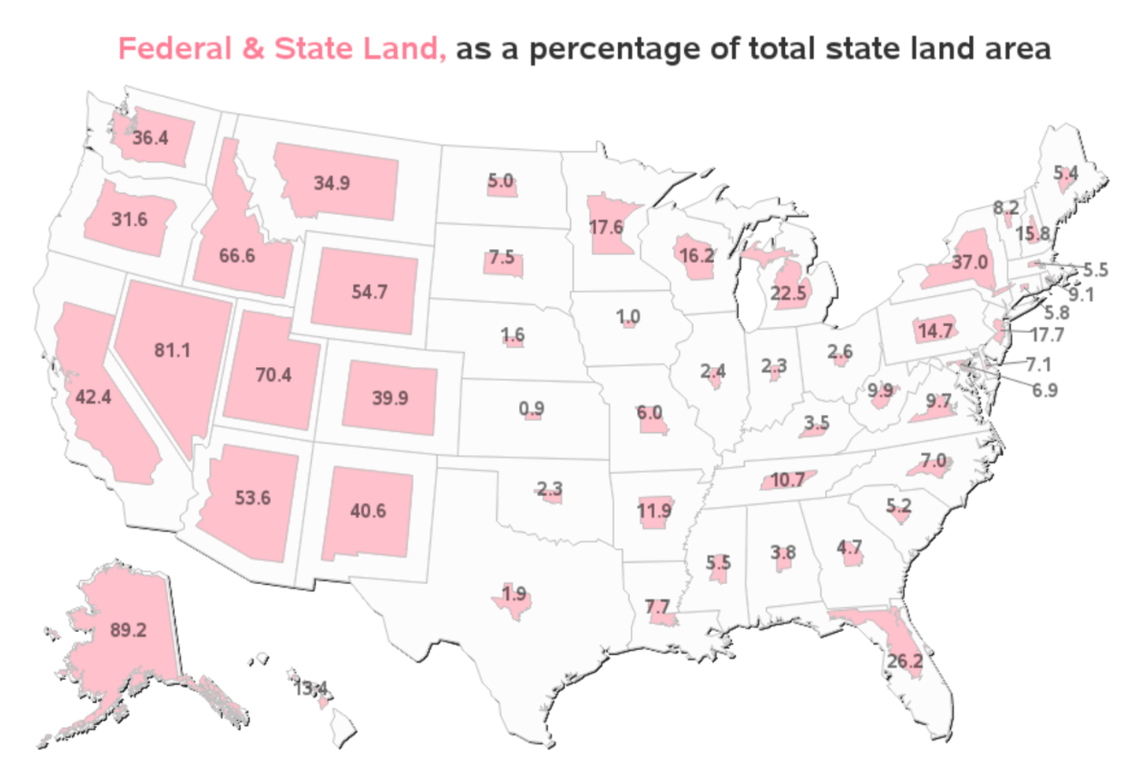
As you can see, there's a lot of federal and state land that could be part of this conversation:
A few quick facts:
- 85% of the most biodiverse and untouched lands on earth are protected and stewarded by Indigenous communities.
- Indigenous lands account for only 24% of Earth’s landmass, but are home to 80% of Earth’s biodiversity,
- and sequester 20% of the world’s carbon.
--> Communities and cultures created in relationship with a particular patch of land have knowledge and practices that developed over millennia, passed down through the generations..
- 1/3 of those defined as "rural poor" and 15% of those in the world's extreme poverty are Indigenous.
- Indigenous communities in 40 countries have won rights to more than 900 million acres over the last 20 years.
One of the words coming up more in this movement is rematriation. As Mohawk seed keeper and farmer Rowen White put it,
“Rematriation is in service to restoring relationality with the land and the countless more-than-human kin held within that land.
Relationships-back.
Loving interspecies reciprocity-back.
Caring songs sung to the land that holds the bones of our ancestors-back.”
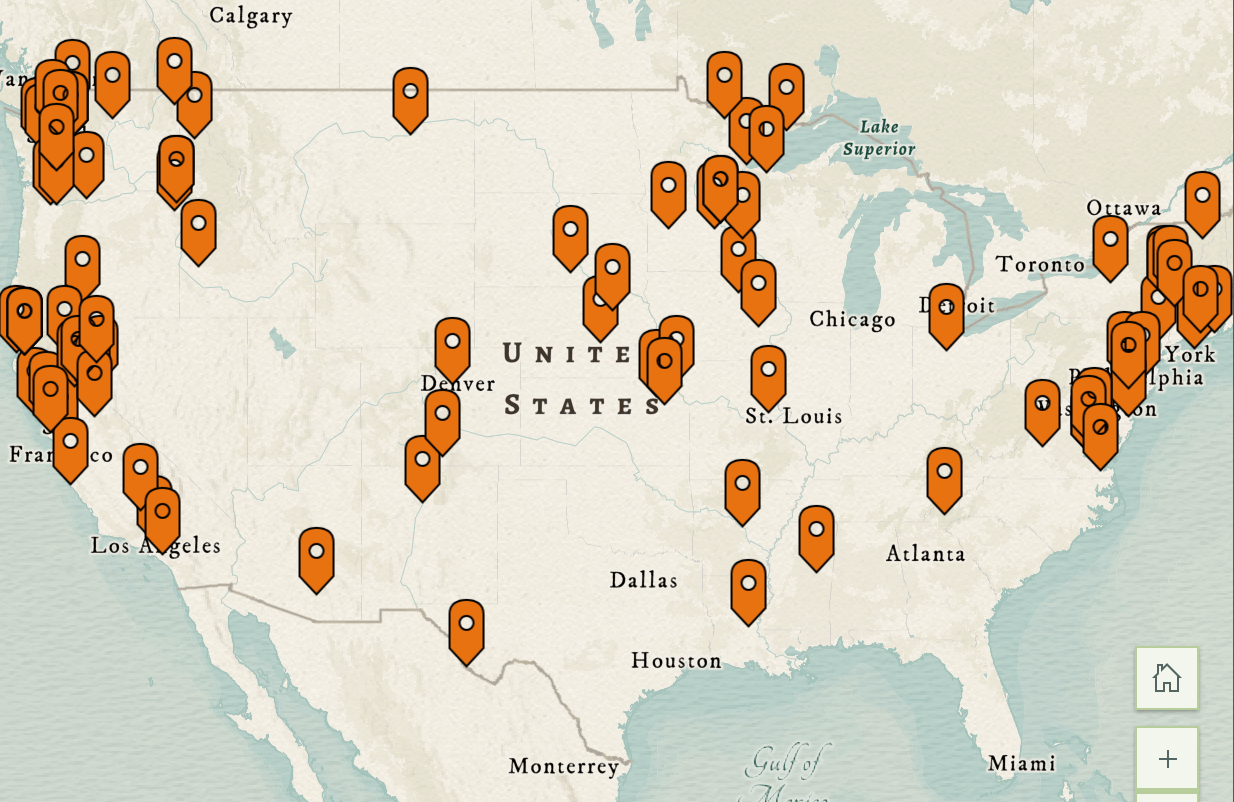
There are, indeed, some big stories:
In Montana, the Confederated Salish and Kootenai Tribes are the stewards of 18,000 acres where bison roam once again.*
In Nebraska, the Ponca people have been growing their sacred corn on farmland signed back to them in 2018.
In Minnesota, the Leech Lake Band of Ojibwe secured 12,000 acres within Chippewa National Forest a couple of years ago; that's an important site for hunting, fishing, gathering, and harvesting wild rice.
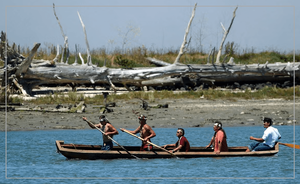
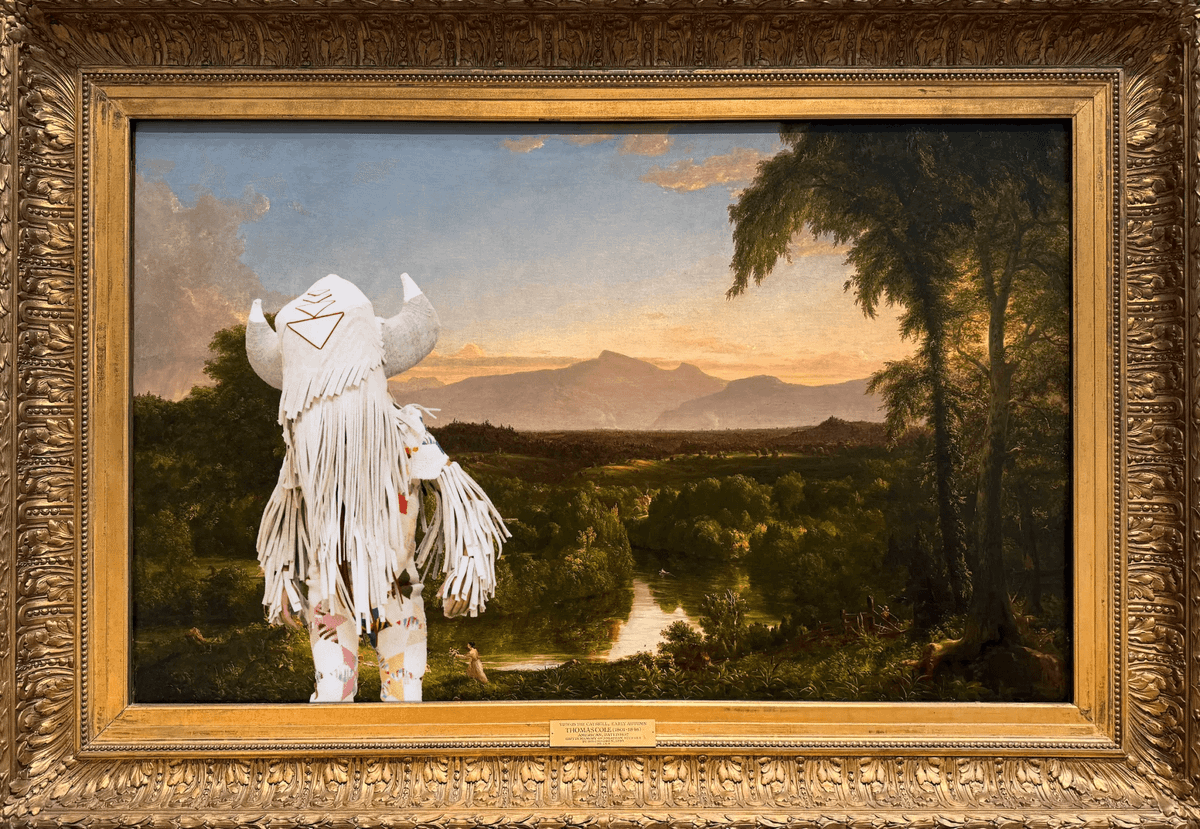
In 2019, the Wiyot Tribe (pictured in the top photo) secured the land deed to almost all of Tuluwat Island, known as the center of its community's universe, likely its ancestral home since at least 300 CE.
*In this case, the federal government "reinstated tribal sovereignty" and transfered the land the Bureau of Indian Affairs "to be held in trust for the Salish and Kootenai Tribe." This is, of course, complex and not my lane.Share this post!
…everything starts and ends with the water and the land…everything is tied into it. Whether you look at our complex social hierarchies we've had prior to colonization, to our stories, our creation stories for placing geographical areas …that's what it means to be place-based peoples.”
–Saul Brown, Heiltsuk Nation
The fight is sometimes winding: For example, the Hupa, Karuk, Klamath, and Yurok nations fished along the Kalmath River in southern Oregon and Northern California for thousands of years. But the US began building dams in 1906, and by 1930, salmon had gone nearly extinct. The Yurok had been been banned from fishing in the river, and had been fighting for their rights, since that time.
Then-VP Dick Cheney diverted even more water to farmers and ranchers in 2002, and the disastrous impact it had on the habitat became a catalyst for a partnership of Indigenous communities and environmentalists that led to, eventually, federal agreement to the dam removal.
Critically, this included sign-on to to a plan created by tribal scientists which would reduce outbreaks of disease among fish which had reportedly infected 90% of juvenile salmon between 2014 and 2015. Finally, in 2023 and 2024, the dams were removed.
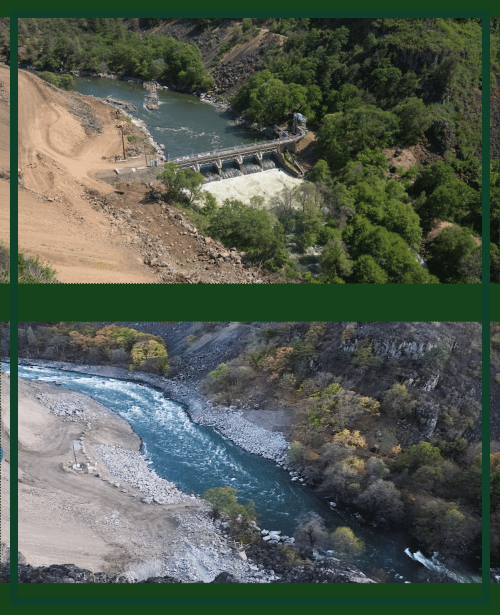
After a century of being blocked from their spawning grounds, the Klamath tribe reported the first documented observation of naturally reproduced Chinook salmon in tributaries of Upper Klamath Lake since the dam building began.
As of a year ago, there was a 30% increase in the number of fish of the same size. And it seems that the river has returned to its natural temperatures, and its overall water quality is improving. The Yurok have also been involved in restoring condors to their native habitat.
In 2025, finally, 47,000 acres of land were officially transferred to Yurok sovereignty.
"You would not sell your mother.
We cannot sell our Earth."
Cheryl Seidner, tribal elder and former tribal chairwoman of the Wiyot
(This story continues below, but first:)

It couldn't be easier to give the people you love the perfect gift this year--
an annual subscription to Life is a Sacred Text's House of Study will fortify their hearts, minds and noggins all year long, and you can get it done with a few clicks.
What could be easier? 🍋 ❤️
The relationship between the land and Indigenous people is real: Before they removed the dam, a big percentage of local Natives reported that they felt the river was unhealthy and this fact impacted their own cultural connection to the river. More recently, 67% of the same folks surveyed say they have enough access to the river, with a notable 62% saying that removing the dam improved their own mental health.
Though a co-management framework and its impacts are measurable (as the Kalmath story above illustrates) and obviously preferable over the old extraction / exploitation models, some have concerns– like Nick Tilsen, the Oglala Lakota Nation founder and CEO of organizing engine NDN Collective, who described co-management as
“Land Back Lite..." [and said] "My worry is that it locks us into a longer power dynamic relationship with the federal government."
Because it's not just about stewardship– and how those in power can continue to use Indigenous people for their own goals–
but Indigenous people's own rights to decide what is best for themselves, irrespective of what it means for non-Indigenous people.
And yet the status of that land relationship matters even for those who are concerned with broader interests: one long-ish view (1985 -2019) study found that reforestation in Brazil was more successful in Indigenous communities who had completed a legal process to receive formal recognition of their ancestral lands (known as land tenure) than those who had not been granted land tenure.
Though, with regards to U.S. land return, in any case, none of it is uncomplicated. One comprehensive study showed that decades of federal dominance on any given land tract established
a complex web of interests and expectations ... most of the laws transferring federal public lands to tribal trust status come with provisions regarding how lands must be managed in the future....
and each parcel has its own tangle of issues that must be navigated with regards to, eg, grazing leases, water and mineral rights, and other claims, and interests.
Needless to say, collective liberation is collective liberation– we all genuinely win when land is returned to the people who have been caretaking it for thousands of years, with ways of knowing and doing that are deeply preserved in understanding and culture. One study, for example, estimates that returning 1,000 million hectares of land to Indigenous tenureship by 2050 would sequester over 12 gigatons of carbon dioxide.
Share this post!
And perhaps it's time for us to think not just about people and nations as having rights, but rather, Mother Earth herself.
- In 2008, Ecuador and Bolivia both added Rights of Nature clauses to their constitutions.
- In 2016, the Ho-Chunk Nation in Wisconsin became the first U.S. tribe to adopt the Rights of Nature, followed by the Ponca Nation in Oklahoma a year later.
- That same year, the New Zealand government granted its third-largest river, the Whanganui, the full legal rights of a person as part of its settlement with the Whanganui iwi, a Māori people.
- Indian courts granted the Ganges and Yamuna rivers and the Himalayan Glaciers the same rights as human beings.
- In 2018, the White Earth band of Ojibwe passed a law formally recognizing the Rights of wild rice.
As the Global Alliance for the Rights of Nature explains:
“Under the current system of law in almost every country, nature is considered to be property, a treatment which confers upon the property owner the right to destroy ecosystems and nature on that property. When we talk about the ‘rights of nature,’ it means recognizing that ecosystems and natural communities are not merely property that can be owned, but are entities that have an independent right to exist and flourish. Laws recognizing the rights of nature thus change the status of natural communities and ecosystems to being recognized as rights-bearing entities with rights that can be enforced by people, governments, and communities.”
Maybe our vision for collective liberation can, and should, expand broader still.
I'm so grateful for you.
❤️ 🌱 ❤️
Who needs to see this post? Send it to them.

Why get someone another object when you can give them inspiration and fortification all year with a House of Study gift subscription?
And every single time a House of Study email arrives, they'll think of you. ❤️
Support independent work committed to telling inconvenient truths:
MORE:
This map has a listing of Indigenous place names for the geographies of Turtle Island.
 Rabbi Danya Ruttenberg
 Rabbi Danya Ruttenberg
I'll also note here that there's also a Black Land Back movement focusing on land through all manner of racist and violent means–to say nothing of the $326 billion lost by Black farmers in the 20th century.

When you subscribe to the Life is a Sacred Text House of Study, you get extra sustenance for your heart, soul and brain and every week.
Isn't it time to invest in the parts of you that matter most?
(The one that looks like this: 💬)