

This is Life as a Sacred Text, 🌱 an everybody-celebrating, justice-centered voyage into ancient stories that can illuminate our own lives.
It‘s always human-authored, and it's run on a nonprofit, so it’s 100% NAZI FREE. More about the project here, and to subscribe, go here:
This newsletter is a reader-supported publication.
Paid subscriptions allow our tiny team to keep doing this work.
If you want in to the House of Study but paying isn't on for you right now, reach out and we'll hook you up, no questions asked. Always.

First of all, reminder that our workshop on op-ed writing is this Wednesday. More, including discount info, at the bottom of the email.
Next: Tomorrow Israel votes– please, God, for a new prime minister.
God willing, this will end decades of authoritarian Bibiocracy, and that man will at last experience justice for the various crimes for which he has been charged, tried and indicted. And God willing, this means that many horrific, dangerous people will lose access to power.**
But no matter how this goes, a few things are true:
Unfortunately, it's unlikely that the new government, whoever's in charge, will prioritize Palestinian lives and/or ending the Occupation. At the same time, harm reduction and its potential is real.
But if Bibi is unseated, it might be tempting for some American Jewish organizations to focus on a #change! theme while both eliding the harm of the last years, and decades– and deepening it.
For the last thirty years, our institutions have propped up Netanyahu, in our name, telling us not to criticize or question, often refusing to heed even mainstream Israeli partners on the ground asking us not to do that.
And when some "criticism of Israel" is permitted, it's framed without engagement with larger systemic forces. For example, we've seen some official condemnations of settler violence as the rogue actions of terrorists, generally without connection to the state apparatuses that allow and enable it, and rarely official comment on the fact that there hasn't been a meaningful ceasefire this whole time.
As someone who has worked my whole career to build bridges without compromising on what I see as the truth, I've resisted writing this piece asking our community to consider its own accountability work.
But– if not now, when?
Rabbi Meir said: When a human being suffers [after sinning,] what expression does the Divine Presence use? My head is too heavy! My arm is too heavy! [So] If God suffers so over spilling of the blood of harmdoers, so much more does God suffer over the spilled blood of the innocent. (Mishnah Sanhedrin 6:5)
So many of us have begged. We have implored. We've tried so hard from the inside. Our comprehensive comms plans have been ignored, even with their prayers for everyone in the Holy Land and Rabbinic quotes echoing the org mission statement. The educational guides we crafted to bridge misunderstandings were thrown away. We have spoken up in meetings only to be chastised afterwards. As congregants, we've written to our rabbis and our board members. We've tried to teach Torah as lay leaders and been thrown off the bimah/dais for being too political about saving lives as we stand in front of national flags planted next to the Holy Ark.


a small selection of examples:
Rabbinical Students for a Just Peace formed in 2002, calling for the community to support peace negotiations and to steer clear of inflammatory rhetoric. They were dismissed with condescending claims that the "timing is probably off," that they should have used "moderate and modest language."
Undergrads who were part of a "pro-Israel, pro-peace" movement and desperate to engage in Jewish life were turned away when they came begging to Hillel's door, asking to be let in. Other campus groups were expelled, some students forced to create new organizations. (I remember a Hillel staff conference at which students who wanted to be at Hillel while fighting for human rights were likened to Korach, the paradigmatic traitor of the Torah.)
Birthright drove busloads of Jews around the Holy Land but would kick them off if they asked about the Occupation or challenged the notion that all of the land between the river and the sea belongs to the Jews– because they "hijacked the conversation."
Many of our leaders, funders and institutions have made the choice to demonize and at times blackball the rabbinical students – now rabbis – who signed what's still referred to as "The Letter" calling for more of our community to understand the many human rights violations that comprise Palestinian daily life in 2021.
Our institutions have also made the choice to continually platform a man who serially, publicly, personally denigrates younger women leaders because he disagrees with their concern with Palestinian lives.
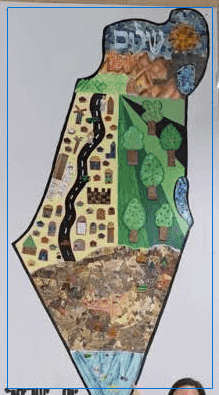
Many summer camps and Day Schools have refused calls from students, alums and staff to teach about the fact of the Occupation, and many of the maps they use still don't mark the existence of the West Bank and Gaza.
How many organizations have specifically refused to allow Breaking the Silence, the organization of IDF vets that tells the truth about what happens under Occupation, to speak under their auspices?
Most recently, we saw the firing of a campus rabbi for, as she tells it, her (Israeli citizen) fiance's work doing protective presence in the West Bank. The institutional defense seems to be that, despite giving her no indication of such, they didn't realize certain things about her "personal conduct and activities"-- apparently because she's a signatory of Rabbis for Ceasefire. And thus could not serve all students? (Again: I believe her.)
How many times even before October 7th was a qualified applicant's concern for Palestinian lives been what kept them from a job? The thing they were told they'd have to suppress if they wanted a position? How many Jewish communal professionals have been fired or pushed out since then over the same? How many times has the erasure of concern for Palestinian safety, lives, dignity been an explicit or implicit condition from funders?
The status quo has long been that if Jewish leaders want to feed their families, any messaging beyond "supporting Israel" is a third rail. Anything that involves asking too many questions about what happens after our own kin enlists, what they do in the illegally occupied West Bank, what they might say after they break the silence. (Those soldiers who come back and share testimonies about what they've seen? About what they've been forced to do? About the moral weight they carry? Positively anti-Israel!)
What might a new election change?
How might it enable or prevent a reckoning?
Work like this is genuinely only possible because I am sustained by all of you, independent of so many of the systems discussed here.
And I can only continue if I have the support of this community.
And. The more that we invest in this space together, the more we can grow it so that we can enable more people to tell more inconvenient truths.
These are facts.
At some point we must face the moral consequences that come with decades of refusal to treat Palestinians like human beings. We've had a number of options:
1) Face what is and begin to become part of a more whole future that values human life, human safety, and human dignity above all else.
2) Pretend that deposing Bibi (please, God) means washing away the past while continuing to look away if/as the profound harms of Occupation and the humanitarian crisis in Gaza continues on.
Adam, the first human, was created alone for peace among human beings, so that one person will not say to another: My ancestor is greater than your ancestor. (Mishnah Sanhedrin 4:5)
3) Continue to actively purge organizations of those not only guilty of care for Palestinians, but anyone who might have the stink of by association.
The Holy One said to them: My handiwork is drowning in the sea, and you are reciting a song before Me? (Talmud Sanhedrin 39b)
It feels as though our community– our Torah, the core principles undergirding who and where we are– has been breaking all around us.
It is soul splintering.
So many “institutions of trust” whose missions seem to be about caring for human beings and serving the divine as long as the human beings created in the divine image are not Palestinian.
My inbox, DMs, and text messages have been full of stories of pain, of people of all ages trying to line up their communal or family connections, or their only local access to Jewish life with their broader values. And recent data notes that 4 in 10 young Jewish adults have pulled back from, or become more selective about participating in, Jewish spaces in recent years– and for many, it's about hostile environments or lack of nuance around Israelis and Palestinians.
Perhaps it is not too late.
No matter who wins the election.
We are at a communal tipping point– the Jewish world is "widening its tent of acceptable views on Israel," as an article in eJewishPhilanthropy put it. Yep. OK.
Data from an internal Israeli database suggests that as of May, 2025, 83% of those slaughtered in Gaza were civilians – a higher percentage of civilian deaths than the atrocities of Aleppo ending in 2016, the Bosnian genocide, or the more recent genocide last year in Sudan. We knew about the bombing of hospitals and schools. The decimation of homes. The statements of genocidal intent that began early and intensified.
“I have removed all restraints, [you’re allowed to] attack everything.” –Yoav Gallant, Former Israeli Defense Minister, Oct 9, 2023
After so many decades of issuing the same press release (no matter what happens on the ground) it's no surprise that we as a community lacked the ability to engage with any serious moral fortitude as Gaza was hit with what was being described by December 2023 as "one of history’s heaviest conventional bombing campaigns" onto a population of 2.2 million people packed into 141 square miles.
That, despite the Talmud reminding us that not a single person's blood was redder than anyone else's, we seemed fine, as long as the blood that ran red in the streets was flying under a different flag.
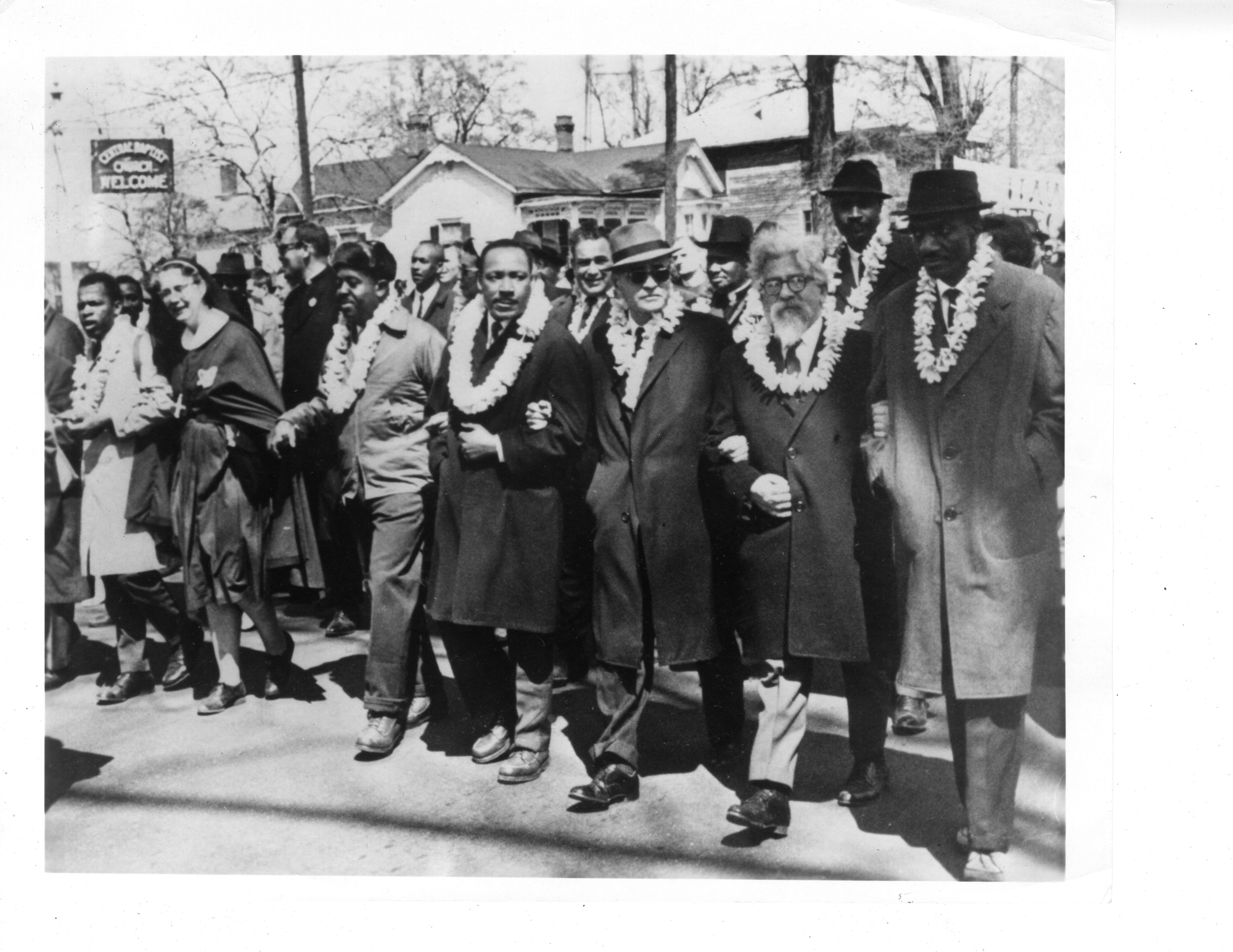
In his 1956 essay, “Teaching Religion to American Jews,” Rabbi Abraham Joshua Heschel begins with the observation that Jews are
“running away from Judaism and religion” because we have “thus far not succeeded in meeting the longing of our people for spiritual nourishment…. [for] the ability to experience the suffering of others, compassion and acts of kindness… the joy of discipline… sacrifice, not casual celebrations, contrition rather than national pride.”
I think the reason Heschel is so valorized (and, still, ignored) now is because he was so incisive. He writes that
“our effort must be to interpret Judaism in terms of human existence as well as in terms of the Jewish situation,” that “the Bible is the story of every [hu]man in all climates and all ages.”
Torah merits nothing if it's about the survival of the Jewish people at the expense of another people.
Who are we?
What are we?
When?
❤️ 🌱 ❤️
Who needs to read this piece?? Share this post:
 Share on Bluesky
 Share on Threads
 Share on Facebook
 Share on Mastodon
 Share on Reddit
 Share on LinkedIn
 Share on X
 Share on Email
(The one that looks like this: 💬)

Give yourself permission– and the tools– to get your work out there.
Join me for two practical workshops to bring your ideas into the world.
- THIS WEDNESDAY October 28: How to Write an Op-Ed
- November 18: How to Write a Book Proposal
- PLUS: How to Write a Book Proposal GUIDE available for purchase anytime, here, and included with the proposal series.
- EXTRA GOODNESS - House of Study members get 75% off everything ! (Join the HOS and we'll send you the discount code.)
(And yes, as long as you’re registered, the session’s recording will also be available to you.)
Support independent work committed to telling inconvenient truths:
Did you know that you can now buy House of Study gift subscriptions for the people you love
(and also the ones you just kind of like pretty OK)
all year round??
Delight the folks who need inspiration and fortification while supporting independent media and enabling more community work to come!
Win! / Win! / Win!