

This is Life as a Sacred Text 🌱, an everybody-celebrating, justice-centered voyage into ancient stories that can illuminate our own lives. It‘s run on a nonprofit, so it’s 100% NAZI FREE. More about the project here, and to subscribe, go here:

Tonight begins the holiday of Tisha B'Av, during which Jews mourn the destruction of the First and Second Temples, the expulsions from Spain and elsewhere, and many other harms and calamities.
(Reminder: If you're fasting, drink lots of water now, and there are many, many reasons not to fast; if you have one, it's a mitzvah to eat.)
There are many resources below to help think about this day in a broader sense, but for our focus I wanted to look at an ancient (and less ancient) practice that seems to have gotten disconnected from the day's observance, but is implicit in it, I think:
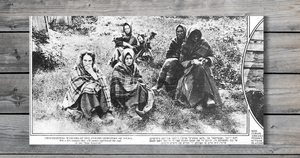
Women mourners.
That is: Women offering laments to, as Rabbi Jericho Vincent puts it, help the community "metabolize grief" is an ancient, ancient practice, and though variations on this custom is found in many cultures, it's a long thread in Jewish history as well.
And, indeed, we hear the call for women to offer laments as explicitly connected with the destruction of the First Temple:
Thus said the God of Hosts: Listen. Summon the mikonenet [the women who mourn] let them come; Send for the wise women, let them come. Let them quickly begin wailing for us, so that our eyes may run with tears, and our eyelids flow with water.
For a voice of wailing is heard out of Zion, How are we ruined! we are greatly confounded, ... because our dwellings have cast us out.
...teach your daughters wailing, and every one her neighbor lamentation (kina). For death is come up into our windows, and is entered into our palaces, to cut off the children from the streets and the young men from the broad places. (Jeremiah 9:16-20)
And:
For thus says God; The sword of the king of Babylonia shall come upon you... This is a lament (kina), and it shall be lamented (knn); The women of the nations shall lament (knn) it... (Ezekiel 32:11, 16)**It's the same root, trying not to confuse things by transliterating out every conjugation.
Indeed, even the first lines of the Book of Lamentations that we read on Tisha B'Av personifies Jerusalem as a crying woman:
How does the city sit solitary, that was full of people! how is she become like a widow!... She weeps sore in the night, and her tears are on her cheeks...
(Lamentations 1:1-2)


A 16th c. Kabbalist from Sfat described the Torah as lamenting (using feminine language, of course) in mourning during the afternoon of Tisha B'Av:
At the time of the afternoon prayer... when they remove the Torah... It is necessary that every person know that the Torah herself is girded in sackcloth and wails and laments (mikonnent) over this bitter day ... (Moshe ben Machir, Seder HaYom, Order of Tisha B'Av 5, 1599)
I haven't been able to find many other connections to these women with Tisha B'Av itself, but they've been a constant throughout the Jewish world, throughout Jewish history, during times of mourning. So during this time of ultimate mourning, it seems like a good day to honor them.